



Lan Ha Bay Travel Guide
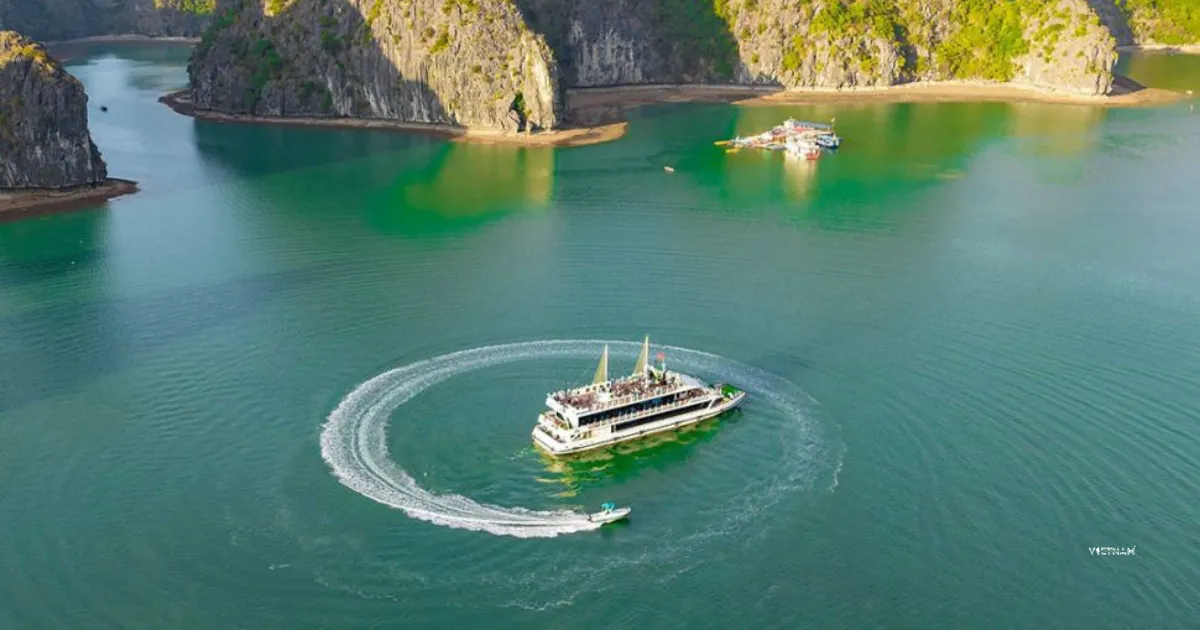
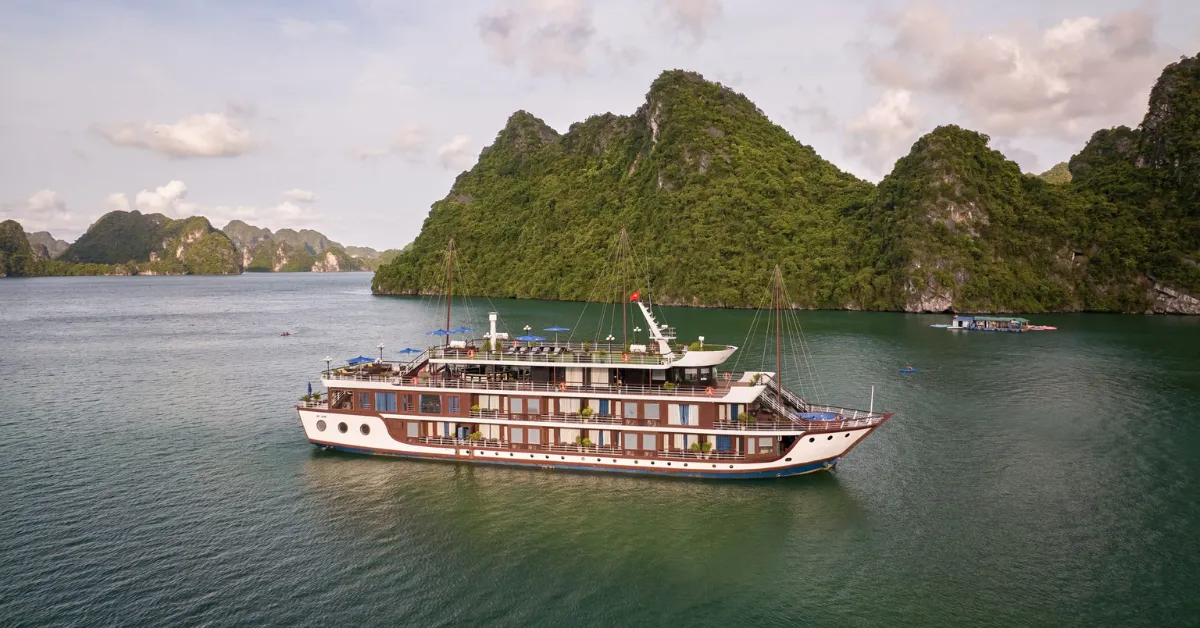
Lan Ha Bay is the lesser-known twin of Ha Long Bay — the same ancient limestone karst landscape, the same UNESCO-quality scenery, but with a fraction of the boat traffic, cleaner water, better kayaking, and a more authentic atmosphere. Located just south of Ha Long Bay near Cat Ba Island, it covers 7,000 hectares and nearly 400 islands. For travelers who’ve done their research, Lan Ha Bay is the answer to the question: how do I experience Ha Long Bay the right way?
This guide covers everything you need to plan a Lan Ha Bay trip: why it’s different from Ha Long Bay, which cruise to choose, what the kayaking is actually like, how to get there, when to visit, and the specific local knowledge that makes the difference between a good trip and an unforgettable one. Written by our Vietnam-based team who cruise these waters regularly with our guests.
Jump to: Why Lan Ha Bay · Lan Ha vs Ha Long · Things to Do · Choosing a Cruise · Cat Ba Island · Best Time to Visit ·Getting There · 3-Day Itinerary · Travel Tips · FAQ
Lan Ha Bay at a Glance

| Quick Fact | Details |
|---|---|
| Location | Southeast of Ha Long Bay, adjacent to Cat Ba Island, Hai Phong Province |
| Area | ~7,000 hectares with nearly 400 islands and islets |
| UNESCO Status | Part of the Ha Long Bay – Cat Ba Archipelago UNESCO World Heritage Site (extended 2023) |
| Distance from Hanoi | ~160 km / 3–4 hours by road + ferry or speedboat |
| Main Embarkation Point | Cat Ba Island (Beo Port or Ben Beo Harbour) |
| Best Time to Visit | October – April (clear skies, calm seas) |
| Recommended Stay | 2 days / 1 night minimum; 3 days / 2 nights ideal |
| Key Advantage Over Ha Long Bay | Far fewer boats, better swimming, superior kayaking, more authentic villages |
| Cruise Price Range | Mid-range: $130–$270 · Luxury: $320–$650+ (per person, 2D1N) |
Why Lan Ha Bay? The Case for the Quieter Bay
There’s a conversation that happens regularly among people who’ve traveled in northern Vietnam more than once. It usually starts with: “Ha Long Bay was beautiful, but…” — and the “but” is almost always about the crowds, the noise from other boats, the anchoring zones where dozens of vessels cluster overnight, the feeling of being processed through a spectacular landscape rather than inhabiting it.
Lan Ha Bay is the answer to that “but.” It sits within the same geological system — the same limestone karst formations that took 500 million years to develop, the same emerald-green water, the same extraordinary vertical islands — but it operates under a different regulatory framework. Fewer cruise permits are issued here. The bay is accessed primarily from Cat Ba Island rather than Ha Long City’s crowded Bai Chay Port, which naturally filters out the budget day-trip market. And the geography itself — more intricate waterways, smaller enclosed lagoons, deeper cave passages — rewards the kind of exploration that only a slower, smaller boat can offer.
Here’s what specifically makes Lan Ha Bay exceptional:
- Dramatically fewer boats. On any given day, Lan Ha Bay sees a fraction of the vessel traffic of Ha Long Bay’s core area. Anchoring at dusk and waking to sunrise without another boat in sight — something increasingly rare in Ha Long Bay — is still entirely possible here.
- Cleaner, calmer water for swimming. Ha Long Bay’s busiest zones have water quality affected by boat traffic and older vessels. Lan Ha Bay’s water is consistently clearer, and there are designated swimming lagoons enclosed by karst walls where the stillness is extraordinary.
- The best kayaking in the Ha Long region. The bay’s network of hidden lagoons, low-ceilinged cave passages, and narrow karst corridors is purpose-built for kayaking. Several passages can only be accessed by kayak — no motor boats can follow. This means genuine solitude, even in peak season.
- Cat Ba Island as a base. Unlike Ha Long Bay, where cruises begin and end at a port with little else to recommend it, Lan Ha Bay is accessed via Cat Ba Island — Vietnam’s largest island in the archipelago, with a national park, climbing routes, freshwater lakes, and a fishing town with real local character. Extending your stay here has value in itself.
- More authentic fishing communities. The floating villages in Lan Ha Bay — Vung Vieng in particular — retain a working, lived-in character that some of Ha Long Bay’s more visited villages have gradually lost. Arriving by kayak rather than motorised tender makes the encounter feel more genuine on both sides.
- UNESCO recognition confirmed. In 2023, the Ha Long Bay – Cat Ba Archipelago UNESCO designation was extended to formally include the Cat Ba area and adjacent waters — confirming what experienced travelers had known for years: this is one continuous, equally spectacular natural system.
Lan Ha Bay vs Ha Long Bay: The Honest Comparison



Both bays are part of the same natural system and offer the same signature karst landscape. But the on-the-water experience differs significantly. Here’s the most complete comparison we can give, based on regularly cruising both:
| Criteria | Lan Ha Bay | Ha Long Bay (Core Area) |
|---|---|---|
| Boat traffic | Low — far fewer permits issued | High — hundreds of boats daily in peak season |
| Water quality | Excellent — consistently clear | Variable — affected by boat density in anchor zones |
| Swimming | Outstanding — multiple enclosed swimming lagoons | Restricted in several areas; quality varies |
| Kayaking | World-class — hidden passages, solo lagoons, no motor access | Good but often crowded at popular cave entries |
| Karst scenery | Equal — identical geological formation | Equal — the postcard imagery originates here |
| UNESCO status | Included in extended 2023 designation | Listed 1994 (original designation) |
| Sunrise solitude | Frequently achievable — anchoring away from other boats | Difficult — anchor zones often crowded overnight |
| Fishing villages | Vung Vieng — more authentic, accessible by kayak | Cua Van — more visited, motorised tender access |
| Embarkation point | Cat Ba Island — has independent value as a destination | Ha Long City / Bai Chay Port — primarily transit |
| Rock climbing | Yes — Cat Ba Island has world-class deep-water soloing | No dedicated climbing access from Ha Long City |
| Logistics from Hanoi | Slightly longer (30–45 min more via Cat Ba ferry) | More direct — straight road to Ha Long City port |
| Price | Similar or slightly higher (fewer boats, better quality control) | Wide range — budget to luxury |
| Our verdict | Recommended for most travelers seeking a genuine experience | Worthwhile for iconic scenery; choose outer zones and mid-range+ boats |
Bottom line: If this is your first time in the Ha Long region and you’re choosing between the two, Lan Ha Bay is our clear recommendation — provided you go with a mid-range or luxury cruise. If you’ve already done Ha Long Bay and want to return to the region, Lan Ha Bay is exactly what will restore the sense of wonder the crowds eroded last time.
Not sure whether Lan Ha Bay or Ha Long Bay is right for your trip? Our Hanoi-based team can help you choose the right bay, the right cruise, and the right itinerary for your travel dates and budget. Message us on WhatsApp →
Best Experiences in Lan Ha Bay
1. Kayaking Through Hidden Lagoons and Cave Passages
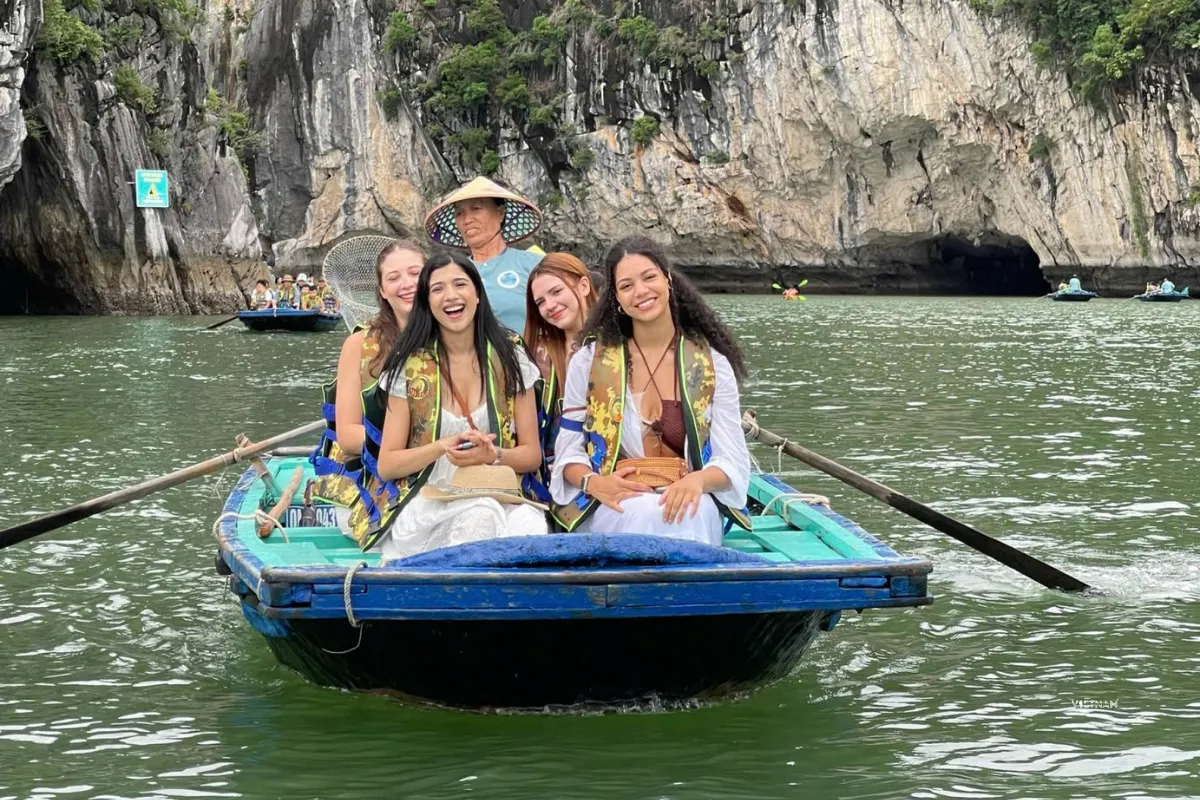
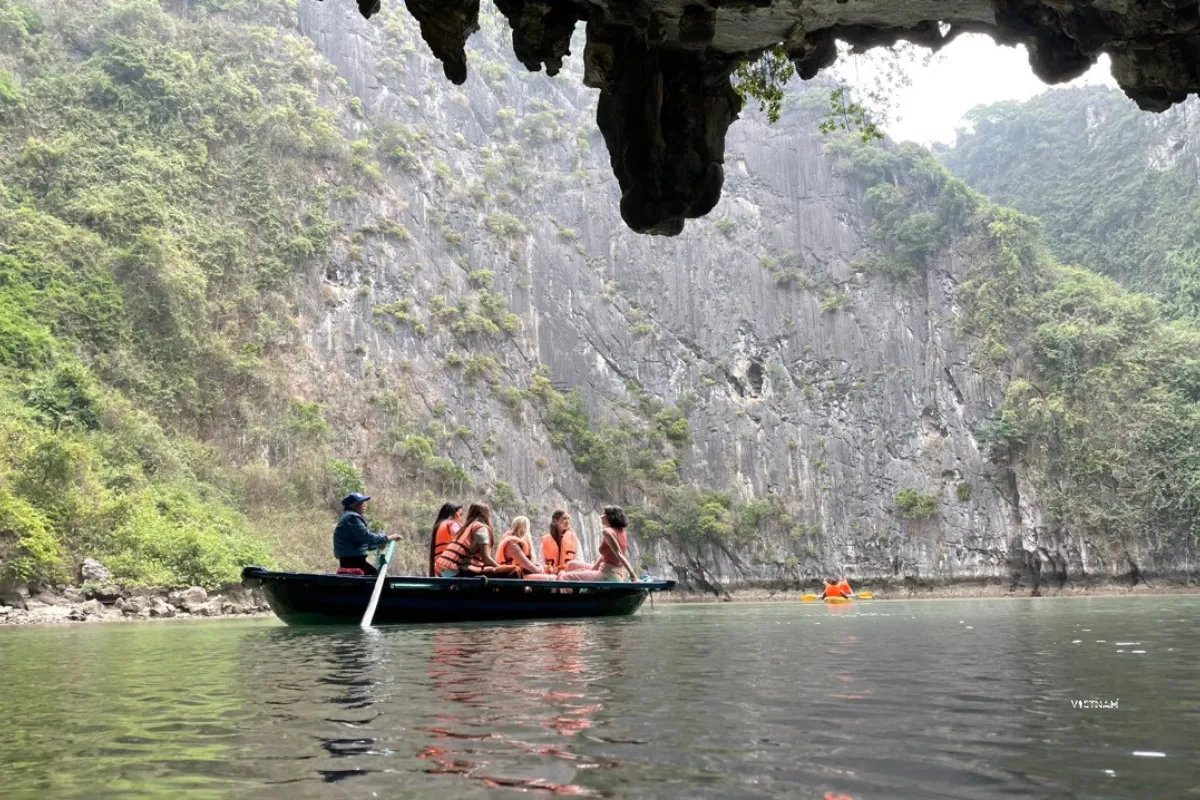
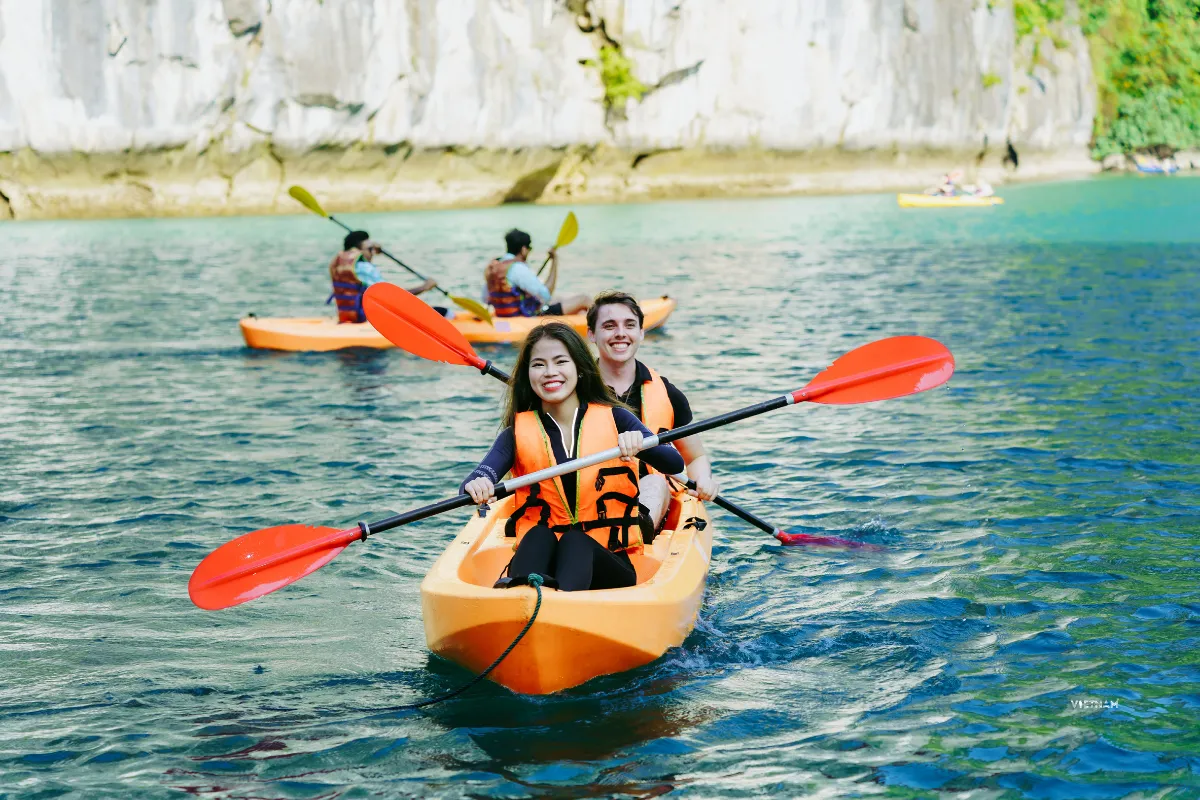
This is the activity that defines Lan Ha Bay — and where it genuinely outperforms everything else in the Ha Long region. The bay’s geography creates a network of kayaking routes that no motor boat can access: passages that require lying back in your kayak to clear a ceiling just 60 centimetres above the waterline, opening into completely enclosed lagoons where the karst walls rise 200 metres on all sides and the only sound is water dripping from stone. The most remarkable routes in Lan Ha Bay — including the dark passage near Ba Trai Dao beach and the lagoon system north of Cat Ba Island — are inaccessible to anything larger than a kayak, which means genuine solitude even in peak season.
Most mid-range Lan Ha Bay cruises include two kayaking sessions. On a 3D2N itinerary, experienced guides can arrange longer independent kayak routes — ask specifically when booking.

Hanoi Old Quarter
The Heart of Hanoi
2. Swimming in Enclosed Karst Lagoons
Lan Ha Bay has several swimming spots enclosed by limestone walls with no boat access except from the water — meaning water quality is excellent and the environment is spectacularly private. Ba Trai Dao (Three Peaches Beach) is the most celebrated: a crescent of white sand inside a near-circular karst bay, reachable only by kayak or swim. The water is clear to 3–4 metres depth on calm days. Most good Lan Ha Bay cruises include a swimming stop here or at comparable enclosed beaches.

Hoan Kiem Lake
Central Lake in the Heart of Hanoi
3. Sunrise and Sunset on Deck
Because Lan Ha Bay cruises anchor away from the densely trafficked zones of Ha Long Bay, sunrises and sunsets here have a silence that’s increasingly rare on the water. At 5:45 AM, with the boat anchored between karst peaks and no other vessels visible, the quality of light over the bay — soft, low, turning the limestone orange-pink — is exactly what the photographs promise and what Ha Long Bay’s busy anchor zones rarely deliver anymore. Set your alarm. This is worth the trip.

Temple of Literature
The First University in Vietnam
4. Visiting Vung Vieng Floating Fishing Village
Vung Vieng is one of the last genuinely inhabited floating fishing villages in the Ha Long region — around 200 families living entirely on the water in wooden houses moored between karst islands, with fish cages below their floors and no connection to the mainland road network. The best way to visit is by kayak, arriving quietly alongside the community’s boats rather than from a motorised tender. Local guides can introduce you to families who have lived on the water for generations — a way of life that’s slowly diminishing as younger generations move ashore.
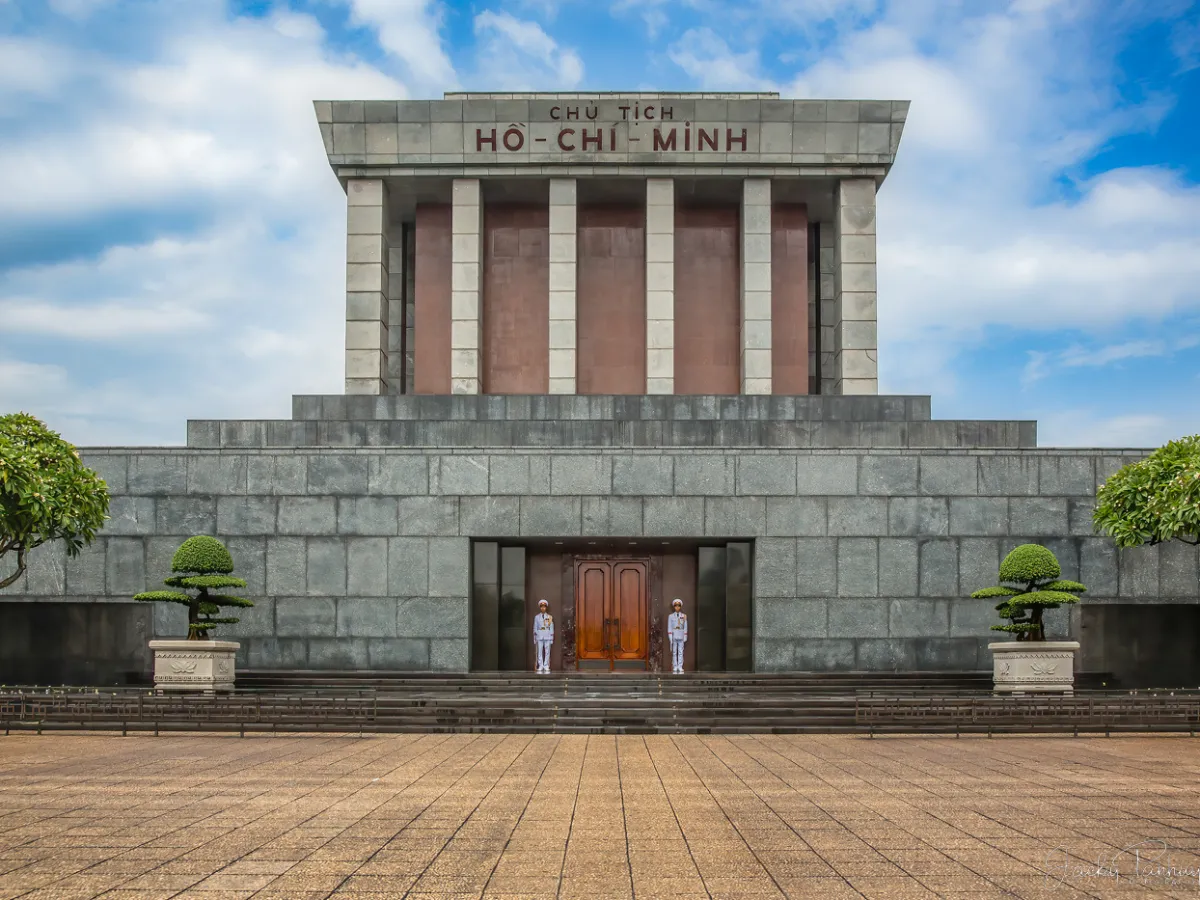
Ho Chi Minh Mausoleum
A Final Rest of National Hero
5. Rock Climbing on Cat Ba Island
Cat Ba Island’s karst walls — rising straight from the sea — are among the best deep-water soloing locations in Southeast Asia. Deep-water soloing (DWS) means climbing without ropes above open water, falling into the sea if you come off the rock. It’s accessible to confident climbers without advanced trad experience, and the setting — climbing vertical limestone with Lan Ha Bay spread below you — is extraordinary. Asia Outdoors on Cat Ba Island runs guided DWS and traditional climbing sessions for all levels; half-day sessions start around $60–$80 per person.

Water Puppet Show
A Must-See in Hanoi
6. Cat Ba National Park Trekking
Cat Ba Island holds the largest area of primary forest in northern Vietnam — Cat Ba National Park covers 15,200 hectares of karst hill forest, home to the Cat Ba langur (one of the world’s rarest primates, with fewer than 80 individuals remaining), along with hornbills, macaques, and an extraordinary diversity of plants and insects. Several trekking routes run through the park, from a 2-hour circular walk to a full-day traverse with views over Lan Ha Bay from 300+ metre ridge lines. A local guide is essential and adds significant value.

Vietnamese Banh Mi
A Must-Try in Hanoi
7. Cycling Around Cat Ba Island
Cat Ba Island’s interior road network — mostly quiet, passing through small farming villages, coastal inlets, and the edges of the national park — is excellent cycling terrain. The 15 km route from Cat Ba Town to Xuan Dam commune runs through the most scenic inland sections; the coastal road south to Tung Thu offers sea views over small bays. Bicycle rental in Cat Ba Town costs around 100,000–150,000 VND per day. The best riding is early morning before the midday heat.
Vietnamese Banh Mi
A Must-Try in Hanoi
8. Night Squid Fishing and Bioluminescence
After dinner on most Lan Ha Bay cruises, the crew sets up squid fishing lines off the back deck — attracted by the boat’s lights, squid gather in the water below and are caught by hand-held lines. In certain seasons and conditions (typically May–September), the disturbance of the water creates bioluminescent flashes — phytoplankton lighting up blue-green around the boat and in the wake of any movement. It’s unpredictable but spectacular when it happens. Ask your cruise operator about bioluminescence likelihood for your specific travel dates.
Vietnamese Banh Mi
A Must-Try in Hanoi
How to Choose the Right Lan Ha Bay Cruise
The Lan Ha Bay cruise market is smaller and generally higher quality than Ha Long Bay — partly because the bay’s relative remoteness from Ha Long City’s budget pier naturally filters out the lowest-end operators. That said, the quality range is still significant. Here’s how to choose well:
By Trip Length
- Day trip: Not available in the same way as Ha Long Bay — Lan Ha Bay’s distance from Hanoi makes a day trip impractical without losing most of the day to transit. Overnight cruises are the only sensible option.
- 2 Days / 1 Night (2D1N): The minimum worthwhile length. You board around noon, have a full afternoon kayaking and swimming, an evening and sunrise on the water, and disembark mid-morning. The kayaking on Day 1 and sunrise on Day 2 are the core experience.
- 3 Days / 2 Nights (3D2N): The ideal. The second day opens up longer kayaking routes, a floating village visit, more swimming time, and a genuinely relaxed pace. Most guests on 3D2N itineraries say the second evening — sitting on deck with the bay completely quiet around you — is the best moment of the trip.
- 4+ Days with Cat Ba extension: Some operators combine a Lan Ha Bay cruise with 1–2 nights based on Cat Ba Island — adding national park trekking, rock climbing, and cycling to the water-based experience. The most complete way to experience this part of northern Vietnam.
By Budget Level
| Tier | Price (2D1N, per person) | What You Get | Our Verdict |
|---|---|---|---|
| Budget | $70–$110 | Basic cabin, shared bathrooms on some boats, larger groups (20–30), older vessels, limited kayaking time | The gap between budget and mid-range in Lan Ha Bay is larger than in Ha Long Bay. We don’t recommend this tier for Lan Ha Bay specifically — save up for mid-range or choose Ha Long Bay’s better-value budget options instead. |
| Mid-Range | $130–$270 | En-suite cabin, good meals (often fresh seafood), kayaking included, max 20 guests, newer boats, professional crew | Best value tier for Lan Ha Bay. Operators like Indochina Junk’s Cat Ba routes, Cat Ba Sunrise, and Paradise Cruises Lan Ha offer outstanding experiences at this level. The difference from budget is dramatic. |
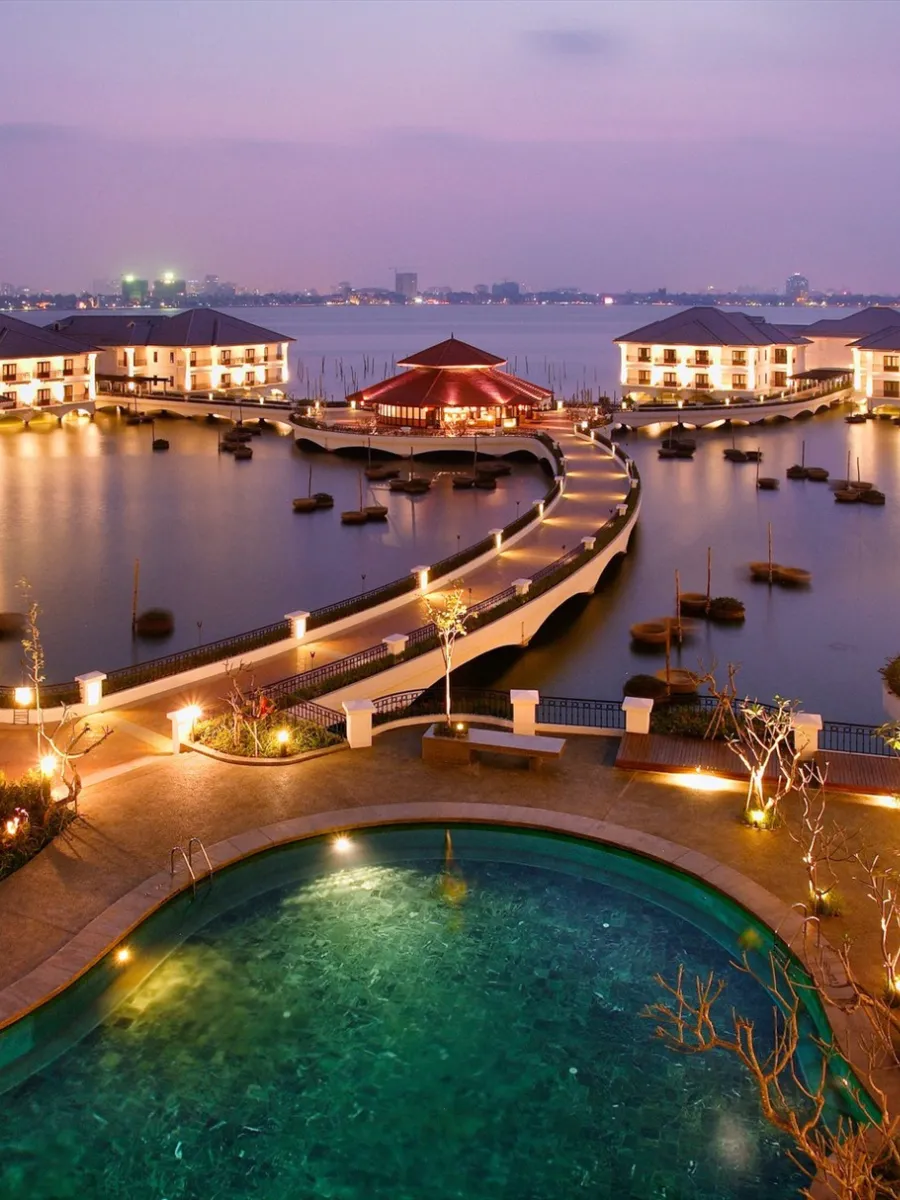
| Luxury | $320–$650+ | Premium cabins with private balconies or sundecks, à la carte dining, 8–12 guests maximum, private kayak guides, fully customisable itinerary | Worth it for couples, honeymoons, or travelers for whom the overnight experience itself is the primary event. The solitude achievable on a 10-guest luxury vessel anchored in Lan Ha Bay at night is genuinely special. |
Key Questions to Ask Before Booking
- “Does your itinerary operate in Lan Ha Bay or Ha Long Bay?” Some operators advertise “Lan Ha Bay” but actually cruise primarily in the Ha Long Bay outer zone and dip briefly into Lan Ha Bay waters. Ask for the specific anchor points and kayaking locations.
- “What is the maximum number of guests on this cruise?” For Lan Ha Bay, anything above 20 guests starts to compromise the experience. A 12-guest boat is meaningfully better than a 20-guest boat for the intimacy the bay offers.
- “How many kayaking sessions are included and how long are they?” A single 1-hour session is not sufficient to explore Lan Ha Bay’s hidden lagoons properly. Look for at least two sessions, each 1.5–2 hours, on a 2D1N itinerary.
- “Does the itinerary include a floating village visit by kayak?” Visiting Vung Vieng by kayak is a different experience to arriving by motorised tender. Not all operators offer this; those that do provide a more authentic and memorable encounter.
- “What is your cancellation policy for typhoon or bad weather?” Lan Ha Bay is exposed to the same weather patterns as Ha Long Bay. Confirm full refund or rescheduling rights for weather-forced cancellations before booking — especially for July–September travel dates.
Cat Ba Island: The Gateway to Lan Ha Bay
Cat Ba Island is what makes Lan Ha Bay categorically different from Ha Long Bay as a travel destination. It’s not just a pier — it’s Vietnam’s largest inhabited island in the archipelago, with a national park covering 60% of its area, a small fishing town with genuine local character, world-class rock climbing, freshwater swimming lakes inside jungle karst, and enough independent activities to fill 2–3 days alongside the cruise.
Most Lan Ha Bay cruise itineraries begin and end at Cat Ba Island’s Beo Port or Ben Beo Harbour. Arriving a day early — staying in Cat Ba Town the night before your cruise — is something we recommend to most guests. It gives you time to explore the island itself (cycling, Cat Co beaches, the national park viewpoint) and means you board your cruise relaxed and oriented rather than stepping straight off a 3.5-hour transfer onto a boat.
Key Things to Do on Cat Ba Island
- Cat Ba National Park: The 2-hour Ngu Lam Peak trail is the best introduction — a circular route climbing to a 177-metre viewpoint over the island’s forest canopy and southern bay. The full-day Frog Lake trail crosses the island via freshwater lakes hidden inside karst valleys. Book guides through the park headquarters in Cat Ba Town (~$15–$25).
- Cat Co Beaches (1, 2, and 3): Three small sandy coves accessible on foot or by boat from Cat Ba Town. Cat Co 3 is the quietest and most scenic. Good for an evening swim before your cruise or a morning after disembarkation.
- Hospital Cave (Hang Quan Y): A secret military hospital built inside a karst cave by the North Vietnamese government during the American War (1963–1975) — capable of treating 150 patients, completely hidden from aerial detection. One of the most fascinating historical sites in the Ha Long region and largely unknown to international tourists. Entry 40,000 VND; guided tour essential.
- Cat Ba Town seafood restaurants: The restaurants along the Cat Ba Town waterfront serve exceptionally fresh seafood at prices significantly lower than Hanoi or Ha Long City. Grilled squid, steamed clams with lemongrass, and whole grilled fish are the specialties. The best restaurants are one block back from the main tourist strip — ask your guesthouse for a recommendation.
Best Time to Visit Lan Ha Bay: Month-by-Month Guide

The best time to visit Lan Ha Bay is October to April — when the weather is clear, seas are calm, and visibility is optimal for kayaking and photography. The bay shares Ha Long Bay’s seasonal weather patterns, with some nuances worth knowing:
| Period | Temp & Conditions | Sea State | Visibility | Verdict |
|---|---|---|---|---|
| Jan – Feb | 15–20°C / 59–68°F. Cool, misty drizzle possible | Calm | Moderate — mist creates atmosphere but reduces distance views | Good for photography — low mist between karst peaks creates ethereal imagery. Too cool for swimming but excellent for kayaking and trekking. Tet (late Jan/Feb) brings domestic tourist surge — book in advance. |
| Mar – Apr ⭐ | 20–28°C / 68–82°F. Warming, clear | Calm | Excellent | Outstanding. Comfortable temperatures, clear skies, calm seas ideal for kayaking. Good swimming from late April. Less crowded than the October–November peak. One of our most recommended windows. |
| May – Jun | 28–33°C / 82–91°F. Warming fast, building humidity | Light–moderate chop | Good | Acceptable. Warmer for swimming; afternoon rain showers start appearing. Water activities still excellent. Bioluminescence season begins in May — a bonus for night kayakers. |
| Jul – Aug | 30–35°C / 86–95°F. Typhoon season | Rough — cancellations possible | Poor during storms | Avoid if possible. Typhoon and tropical storm risk is real — cruises can be cancelled with little notice. Water visibility drops significantly. Lower prices exist for a reason. Travel insurance is non-negotiable if visiting in this window. |
| Sep | 28–32°C / 82–90°F. Tail end of wet season | Improving through the month | Improving | Hit or miss. Early September still carries storm risk; late September is usually much better. Good value — prices drop and the bay is less crowded. Bioluminescence still active. |
| Oct – Nov ⭐ | 22–28°C / 72–82°F. Perfect | Calm and clear | Exceptional | Peak season — best overall. Ideal weather for every activity: kayaking, swimming, trekking, photography. Sunrise and sunset light quality is exceptional. Book cruises and Cat Ba accommodation well in advance. |
| Dec | 15–22°C / 59–72°F. Cool and dry | Calm | Excellent | Underrated. Clear skies and excellent visibility for photography. Too cold for most swimmers but all other activities at their best. Quieter than November — a good window for travelers who dislike crowds. |
Practical note on bioluminescence: Lan Ha Bay has conditions favourable for bioluminescent plankton from roughly May through September. The phenomenon is weather and tide dependent and can’t be guaranteed — but if witnessing it is a priority, plan for a June or July cruise (accepting the weather trade-off) and choose an operator who specifically mentions it as a night activity.
How to Get from Hanoi to Lan Ha Bay
Getting to Lan Ha Bay requires one more step than Ha Long Bay — you need to reach Cat Ba Island before boarding your cruise. The additional 30–45 minutes of travel time is well worth it, and the journey itself (particularly the Cat Ba Island ferry crossing) is scenic.

| Route | Duration | Cost (approx.) | Best For |
|---|---|---|---|
| Private car → Hai Phong → Speedboat to Cat Ba Island | 2.5–3 hrs total | $60–$90 (car); $15–$25 pp (speedboat) | Groups, couples, families. Most comfortable and flexible. Many cruise operators include this route in their package price — confirm when booking. |
| Private car → Tuan Chau → Speedboat to Cat Ba | 3–3.5 hrs total | $60–$90 (car); $20–$30 pp (speedboat) | Alternative route departing from Ha Long Bay area — useful if combining with a Ha Long Bay stop or if staying in Ha Long City first. |
| Shuttle bus from Hanoi Old Quarter → Ferry to Cat Ba | 3.5–4.5 hrs total | $15–$25 pp (all-in shuttle + ferry) | Budget travelers and solo travelers. Several operators run daily combined shuttles from Hanoi to Cat Ba Island. Comfortable, air-conditioned, straightforward. |
| Seaplane (Hai Au Aviation, Hanoi → Cat Ba) | 35–40 min | $130–$170 pp one way | Luxury travelers and aviation enthusiasts. Aerial views of the karst archipelago on approach are extraordinary. Weather dependent — cancellations occur in poor visibility. |
| Public bus + local ferry (independent) | 4–5 hrs | $5–$8 pp | Experienced independent budget travelers only. Requires navigating connections between Hanoi’s bus stations, Hai Phong, and the Cat Ba ferry. Not recommended on cruise boarding days. |
Our recommendation: If your cruise package includes transfers from Hanoi, use them — operators who organise Lan Ha Bay cruises know the Cat Ba logistics and handle the ferry connection smoothly. If booking independently, the shuttle bus + ferry combination from Hanoi Old Quarter is reliable and affordable for most travelers.
Beyond the Cruise: Less-Known Lan Ha Bay Experiences
These are the experiences our guests consistently describe as the most memorable — the ones that don’t appear on most Lan Ha Bay itinerary templates:
- Dawn kayak before the crew wakes: On some mid-range and luxury Lan Ha Bay cruises, guests can take kayaks out independently before the 7 AM breakfast service. Paddling alone at first light — the bay completely still, no engine noise, karst peaks emerging from mist — is the closest most people will ever come to having this landscape to themselves. Ask your cruise operator whether early independent kayaking is permitted; those that allow it tend to attract the guests who value it most.
- Deep-water soloing on karst walls: Cat Ba Island’s sea-level karst walls offer what many climbers consider the most aesthetically extraordinary DWS routes in Asia. You climb without ropes, above open water, on ancient limestone that ranges from beginner-friendly slabs to multi-pitch 6c routes. Asia Outdoors in Cat Ba Town has been operating guided climbing since 2004 and maintains relationships with local authorities to keep access open. A half-day session is bookable independently from your cruise.



- Night kayaking through bioluminescence (seasonal): A handful of Lan Ha Bay operators offer guided night kayak sessions in bioluminescent conditions (typically May–September). Paddling in complete darkness through water that lights up blue-green with every stroke — with karst silhouettes on all sides and no artificial light visible — is one of the most genuinely otherworldly experiences available in Southeast Asia. Availability depends on conditions; ask specifically when booking for this window.
- Visiting Hospital Cave on Cat Ba Island: The secret American War-era military hospital built inside a karst cave, capable of housing 150 patients and completely invisible from aerial observation. One of the most historically fascinating sites in northern Vietnam, visited by a fraction of the people who come to the region. A 45-minute guided visit; entry 40,000 VND.
- Freshwater lake swimming inside Cat Ba National Park: The Frog Lake trail inside Cat Ba National Park leads to a series of freshwater lakes enclosed in karst valley — essentially Ha Long Bay’s scenery, but with fresh clear water for swimming and complete absence of boats. Almost no international tourists reach this point. A full-day guided trek from Cat Ba Town; arrange through the park headquarters.
- Cat Ba Island overnight before the cruise: Arriving in Cat Ba Town the evening before your cruise departure — staying at a local guesthouse, eating seafood from the waterfront restaurants, cycling to Cat Co 3 beach at sunset — transforms the logistics of getting to Lan Ha Bay into part of the experience. It’s a 12-hour extension that most travelers who do it say they’d always do in future.
3-Day Lan Ha Bay Itinerary: The Best Structure for First-Time Visitors
This is the itinerary we recommend most often — arriving in Cat Ba Island on Day 1 evening, cruising Lan Ha Bay on Days 2–3, and returning to Hanoi on Day 3 afternoon. It sits naturally inside a 5-day northern Vietnam trip and delivers both the water experience and the island experience.


Day 1: Hanoi → Cat Ba Island — Arrival & Island Exploration
- Depart Hanoi Old Quarter 8:00–8:30 AM by private car or shuttle bus toward Hai Phong.
- 11:00 AM: Speedboat from Hai Phong to Cat Ba Island (~45 minutes — scenic crossing through small karst islands).
- 12:00 PM: Arrive Cat Ba Town. Check in to guesthouse. Light lunch at a waterfront restaurant.
- Afternoon: Choose your afternoon activity — Cat Ba National Park Ngu Lam Peak hike (2 hrs, panoramic views), Hospital Cave (45 min, historically extraordinary), or cycling to Cat Co 3 Beach (30 min from town, quietest of the three beaches).
- 5:30 PM: Return to Cat Ba Town. Sunset over the southern bay from the hilltop viewpoint above the town.
- Evening: Fresh seafood dinner at a local restaurant one block back from the main tourist strip — the best value in the region. Grilled squid, steamed clams, and whole grilled fish with morning glory vegetables.
- Overnight in Cat Ba Town
- Accommodation tip: Stay at a guesthouse with a rooftop terrace if possible — Cat Ba Town’s bay views at sunset and sunrise are exceptional. Mid-range options ($25–$60) in the town centre are better positioned than the resort strip north of town for this day’s programme.
Day 2: Embarkation → Full Lan Ha Bay Cruise Day
- 8:00 AM: Early breakfast at guesthouse. Pack lightly — leave main luggage at Cat Ba Town guesthouse storage if returning Day 3, or bring it to the port for cruise transfer.
- 9:00 AM: Transfer to Beo Port / Ben Beo Harbour (5 min from Cat Ba Town by taxi or xe om).
- 9:30–10:00 AM: Board cruise. Welcome drinks, cabin orientation, departure briefing.
- Late morning: First kayaking session — cave passages and hidden lagoon exploration. Allow 2 hours. The caves accessible in Lan Ha Bay before noon (before other boats arrive) are at their quietest and most atmospheric.
- 1:00 PM: Lunch on board — typically fresh seafood caught from the bay. Freshwater prawns, steamed fish, and local greens are standard on good mid-range boats.
- Afternoon: Swimming stop at Ba Trai Dao (Three Peaches) enclosed beach — karst walls on all sides, clear water, white sand. Allow 90 minutes.
- Late afternoon: Visit Vung Vieng floating fishing village by kayak. Arrive quietly alongside the community’s boats. Allow 60–75 minutes.
- 5:30 PM: Anchor for the evening in a quiet bay away from other boats. Sundowners on deck.
- Evening: Dinner on board. Squid fishing from the back deck. Stargazing — Lan Ha Bay’s distance from major light sources means genuinely dark skies on clear nights.
- Overnight on cruise
- Cruise tip: Ask your cruise manager to anchor in the northern section of Lan Ha Bay if weather permits — farther from the Ha Long Bay boundary, fewer boats, and better sunrise orientation.
Day 3: Sunrise → Final Kayaking → Return to Hanoi
- 5:45 AM: Sunrise on deck. Set your alarm without exception. The light over Lan Ha Bay at dawn — with the boat anchored in a quiet bay and no other vessels moving — is the defining image of this trip.
- 6:30 AM: Optional early morning independent kayak (if operator permits). Paddle for 45–60 minutes before breakfast.
- 7:30 AM: Breakfast on board.
- 8:30 AM: Final kayaking session — longer independent route or guided cave circuit, depending on operator.
- 10:30 AM: Check out and pack bags. Final views from the sundeck.
- 11:00 AM: Disembark at Beo Port. Transfer to speedboat back to Hai Phong (or directly to Cat Ba Town if staying another night).
- 2:00–2:30 PM: Arrive Hai Phong. Private car transfer to Hanoi.
- 4:30–5:00 PM: Arrive Hanoi. Check into hotel. Evening free — a quiet Old Quarter dinner or bia hoi at the corner to decompress.
- Overnight in Hanoi
- Tip: If your flight departs Hanoi the following morning, book a hotel near the Old Quarter for easy access to Noi Bai Airport by taxi or Grab. The 45-minute airport transfer is straightforward and significantly cheaper pre-booked through your hotel.
Want This Lan Ha Bay Itinerary Built Around Your Trip?
Whether you’re combining Lan Ha Bay with Hanoi and Ninh Binh, traveling with young children, or looking for a Cat Ba Island rock climbing extension — our Hanoi-based team builds Lan Ha Bay itineraries around your actual schedule and travel style. Most guests receive a customised quote within 4 hours.
Request Your Free Lan Ha Bay Itinerary →
No obligation. We’ll suggest the right cruise for your group — not the most expensive one.
Sale!

Authentic Hanoi Day Tour | Incense Village & Duong Lam Ancient Village

Place
Hanoi

Duration
1D
Original price was: 120$.105$Current price is: 105$.
Sale!
Hanoi Cycling Tour | Bat Trang, Kim Lan & Xuan Quan Flower Villages
Place
Bat Trang
Duration
1D
Original price was: 65$.55$Current price is: 55$.
Sale!
Half-Day Hanoi City Tour | Explore Iconic Landmarks in Just Few Hours
Place
Ha Noi
Duration
1D
Original price was: 50$.35$Current price is: 35$.
Sale!
Exclusive Hanoi Street Food Tour | Discover Hanoi’s Best Eats on Foot
Place
Ha Noi
Duration
1D
Original price was: 50$.35$Current price is: 35$.
Sale!

Hanoi City Tour | Highlights, Local Culture | Best of Hanoi in One Day
Place
Ha Noi
Duration
1D
Original price was: 55$.45$Current price is: 45$.
Sale!

Top Hanoi City Walking Tour | Discover the Best of Hanoi in One Day
Place
Hanoi Capital City
Duration
1D
Original price was: 60$.50$Current price is: 50$.
Sale!

Incense Village Hanoi Tour | Explore Traditional Craft & Local Culture
Place
Quang Phu Cau
Duration
1D
Original price was: 85$.55$Current price is: 55$.
Sale!

Private Mai Chau Day Trip And Waterfall & Hot Spring Bath
Place
Mai Chau
Duration
1D
Original price was: 175$.125$Current price is: 125$.
Essential Lan Ha Bay Travel Tips (From Our Local Team)
- Add at least one night in Cat Ba Town to your Lan Ha Bay trip. Arriving the evening before your cruise and spending time on the island itself transforms Lan Ha Bay from a cruise itinerary into a fuller destination. The seafood, the evening atmosphere in the town, and the access to morning activities before boarding make it meaningfully better. This is the single most consistent recommendation from our guests post-trip.
- Confirm your cruise operates primarily in Lan Ha Bay — not just “near” it. Some operators market “Lan Ha Bay cruises” but anchor predominantly in Ha Long Bay’s outer zones. Ask for the specific anchor points and kayaking locations before booking. Any reputable operator will provide this information clearly.
- Pack a dry bag as your primary on-water bag. Lan Ha Bay’s kayaking involves low cave ceilings, water splashing from cave walls, and occasional waves in more open sections. A dry bag for your phone, camera, and valuables is essential — more so here than in Ha Long Bay’s more sheltered zones.
- Choose a cabin with a window or porthole, not just for light — for the sound of water. Waking to the sound of the bay lapping against the hull, with the ability to see the karst landscape from your bunk, is a genuinely different experience from a windowless lower-deck cabin. Most mid-range and luxury Lan Ha Bay boats offer upper-deck cabins with either windows or balconies — confirm this at booking.
- Reef-safe sunscreen only. Lan Ha Bay is a marine protected area with significantly better coral health than Ha Long Bay’s most trafficked zones. Standard chemical sunscreens damage coral ecosystems — bring mineral SPF (zinc oxide or titanium dioxide). Several operators now provide it on board; check when booking.


- Take seasickness medication proactively if sensitive. Lan Ha Bay is generally calmer than open ocean, but late September and October can bring residual swell, and some guests are sensitive to overnight boat movement. Take medication the evening before boarding, not after symptoms start. Ginger tea is available on most boats.
- Tip your crew. Cruise crew wages are low; tips are expected and meaningful. Standard is $5–$10 USD per person per day, given in cash to the crew collectively at the end of the cruise. Most boats have a crew envelope or tip box in the dining area.
- Book Ha Long Bay vs Lan Ha Bay based on logistics, not just preference. If your Hanoi departure is tight and every hour matters, Ha Long Bay’s shorter transit from Hanoi is a real consideration. Lan Ha Bay’s extra 30–45 minutes each way is worth it for most travelers — but not if it means cutting your cruise short by half a day. Factor transit honestly into your planning.
Frequently Asked Questions — Lan Ha Bay Travel Guide
What is Lan Ha Bay?
Lan Ha Bay is a bay located south of Ha Long Bay, adjacent to Cat Ba Island in Hai Phong Province, northern Vietnam. It covers approximately 7,000 hectares with nearly 400 limestone karst islands. Part of the Ha Long Bay – Cat Ba Archipelago UNESCO World Heritage Site (extended 2023), it shares Ha Long Bay’s dramatic geology but has significantly less boat traffic, cleaner water, better kayaking, and more authentic floating fishing villages — making it the preferred choice for experienced travelers to the region.
Is Lan Ha Bay better than Ha Long Bay?
For most travelers seeking a genuine experience of the Ha Long karst landscape, yes — Lan Ha Bay is better. It offers identical scenery with far fewer boats, cleaner swimming water, superior kayaking through accessible hidden lagoons, and Cat Ba Island as a meaningful destination in itself. Ha Long Bay has the advantage of name recognition and slightly shorter transit from Hanoi. For first-time visitors to the region who do their research, Lan Ha Bay is consistently the recommendation of experienced travelers and local operators alike.
How far is Lan Ha Bay from Hanoi?
Lan Ha Bay is approximately 160 km from Hanoi — a journey of 3–4 hours combining a private car or shuttle bus to Hai Phong (around 2–2.5 hours) and a speedboat crossing to Cat Ba Island (45 minutes). This is 30–45 minutes longer than reaching Ha Long Bay’s main port. Most cruise operators include transfers in their package price; the combined shuttle bus + ferry option from Hanoi Old Quarter costs approximately $15–$25 per person.
What is the best time to visit Lan Ha Bay?
The best time to visit Lan Ha Bay is October to April, when weather is clear, seas are calm, and visibility is excellent. October and November are peak season — ideal conditions for kayaking, swimming, and photography. March and April are also excellent with comfortable temperatures and fewer crowds than autumn. Avoid July and August when possible: typhoon season brings rough seas and occasional cruise cancellations, and water visibility decreases significantly.
How much does a Lan Ha Bay cruise cost?
A Lan Ha Bay cruise costs approximately $130–$270 per person for a mid-range 2-day/1-night itinerary, and $320–$650+ for luxury. Budget options exist from $70–$110 per person, but the quality gap between budget and mid-range is larger in Lan Ha Bay than in Ha Long Bay — we recommend mid-range as the minimum for a worthwhile experience here. Most packages include meals, kayaking, cave entry, and round-trip transfer from Hanoi or Cat Ba Island.
Can I do Lan Ha Bay as a day trip from Hanoi?
No — a day trip to Lan Ha Bay from Hanoi is not practical or recommended. The transit time to Cat Ba Island (3–4 hours each way) would consume most of the day, leaving only 2–3 hours on the water. Lan Ha Bay’s best experiences — kayaking through hidden lagoons, sunrise anchored between karst peaks, visiting a floating village by kayak — require at minimum one overnight cruise. A 2-day/1-night cruise is the minimum worthwhile commitment; 3 days/2 nights is ideal.
What is the difference between Lan Ha Bay and Ha Long Bay?
Lan Ha Bay and Ha Long Bay share the same limestone karst geology and UNESCO-quality scenery, but differ significantly in experience. Lan Ha Bay has far fewer cruise boats, cleaner and more swimmable water, better kayaking (including cave passages inaccessible to motor boats), and more authentic floating fishing villages. Ha Long Bay is more famous, has a shorter transit from Hanoi, and offers a wider range of cruise prices. For most travelers seeking a genuine experience, Lan Ha Bay is the better choice; Ha Long Bay suits those prioritising convenience or iconic recognition.
Do I need to visit Cat Ba Island as part of a Lan Ha Bay trip?
Lan Ha Bay cruises embark from Cat Ba Island, so you’ll pass through Cat Ba Town as part of any itinerary. Whether to stay on the island before or after your cruise is optional but strongly recommended. Spending one evening in Cat Ba Town — exploring the national park, visiting Hospital Cave, eating fresh seafood at local restaurants, cycling to the beaches — adds significant value to the trip and transforms Lan Ha Bay from a cruise into a multi-layered destination experience. Most guests who extend their stay on Cat Ba Island say it was one of the highlights of their Vietnam trip.
Plan Your Lan Ha Bay Trip with a Local Expert
We’re a Hanoi-based travel company — our team cruises Lan Ha Bay regularly with guests and works directly with the cruise operators we recommend. When you book through us, you get honest, specific advice: which cruise is genuinely worth the price for your group size and travel style, whether to add a Cat Ba Island night, how to time your visit around the rice harvest or bioluminescence season, and a contact you can reach on WhatsApp at any point during your trip.
- Hanoi-based team — we’ve been on every cruise we recommend
- Mid-range and luxury Lan Ha Bay cruises — no budget boats
- Combined Hanoi + Lan Ha Bay + Ninh Binh packages (our most popular trip structure)
- Cat Ba Island extensions with rock climbing, trekking, and cycling options
- Available 7 days a week — respond within 2–4 hours on WhatsApp
Get Your Free Lan Ha Bay Trip Plan
Tell us your travel dates, group size, budget, and what matters most — kayaking, photography, Cat Ba trekking, or simply the most peaceful overnight experience possible. We’ll send you the right options with transparent pricing within 4 hours.
Request Your Free Lan Ha Bay Itinerary →
Or message us directly on WhatsApp: +84 849 391 981
Explore More Northern Vietnam
- Ha Long Bay Travel Guide — full comparison, cruise tiers, and how to choose the right bay
- Cat Ba Island Guide — national park, rock climbing, beaches, and the best local restaurants
- Hanoi Travel Guide — the best base for your northern Vietnam trip
- Ninh Binh Travel Guide — the perfect complement to a Lan Ha Bay cruise
- 5-Day Northern Vietnam Itinerary — Hanoi + Lan Ha Bay + Ninh Binh
- 7-Day Northern Vietnam Itinerary — add Sapa, Ha Giang, or a Cat Ba Island extension
- Browse Lan Ha Bay Cruises →