


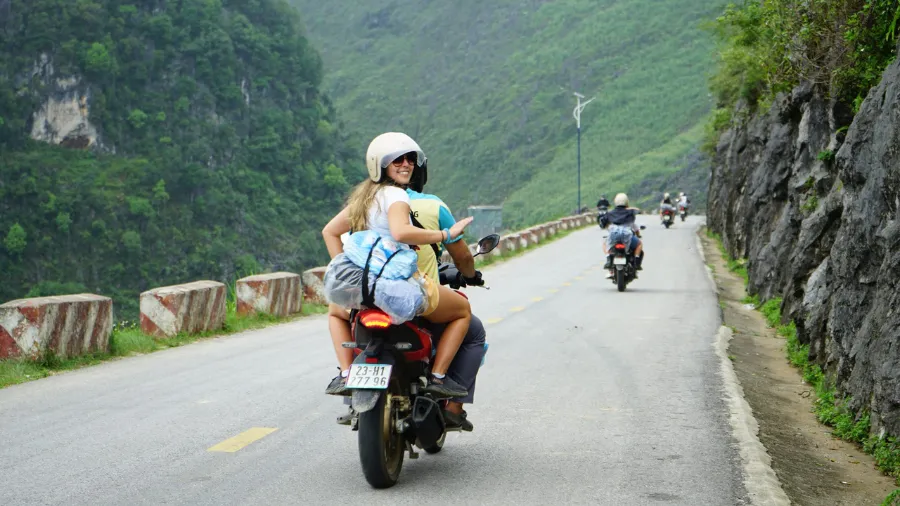
Ban Gioc Waterfall Travel Guide
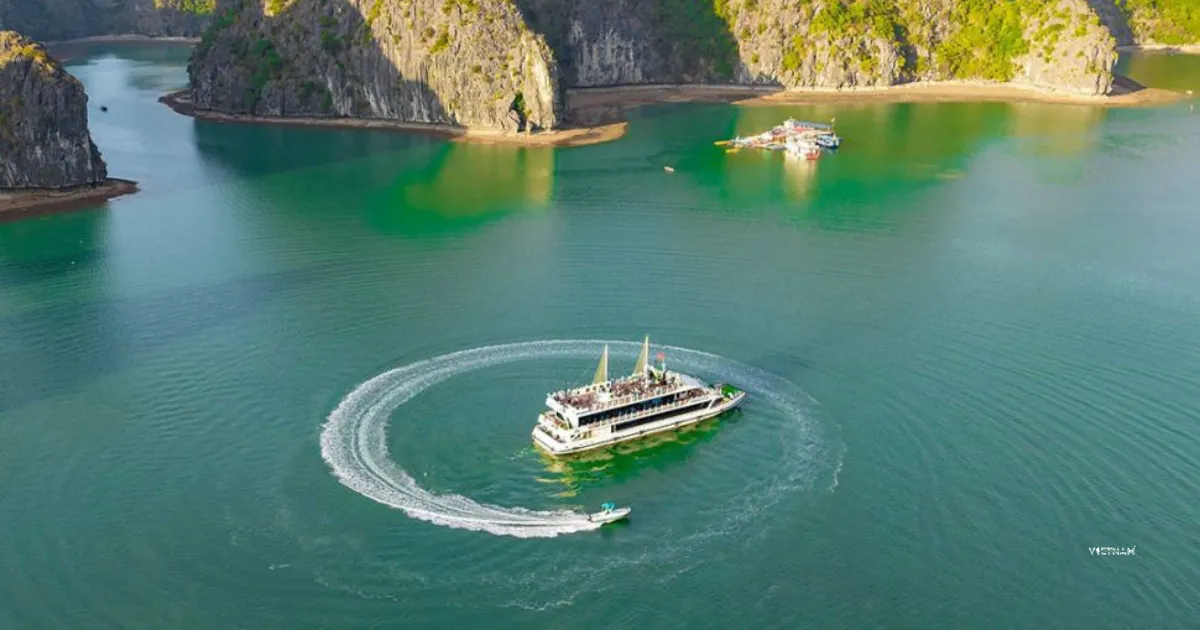
Ban Gioc is Vietnam’s largest and most spectacular waterfall — a 300-metre-wide cascade on the Quay Son River falling in three tiers across the border between Vietnam and China’s Guangxi Province, 370 kilometres north of Hanoi. Surrounded by karst limestone peaks, split by a mid-river island into Vietnamese and Chinese sides, and framed by paddy fields and forest, it delivers a visual scale that no other waterfall in Vietnam approaches — and does so in a landscape that is among the least-visited and most beautiful in the entire country.
This guide covers everything: the best viewpoints and times of day, Nguom Ngao Cave, the Cao Bang circuit, when to visit, how to get there from Hanoi, where to stay, and the honest local knowledge that most Ban Gioc travel content misses entirely.
Jump to: Why Ban Gioc | Things to Do | Best Viewpoints | Best Time to Visit | Getting There | Where to Stay | 3-Day Itinerary | Cao Bang Circuit | Travel Tips | FAQ
Ban Gioc Waterfall at a Glance
| Quick Fact | Details |
|---|---|
| Location | Trung Khanh District, Cao Bang Province — on the Vietnam–China border |
| Status | Vietnam’s largest waterfall · Shared Vietnam–China natural border landmark |
| Dimensions | ~300 m wide · 30 m tall (main upper cascade) · Three-tier structure |
| Distance from Hanoi | ~370 km / 6.5–7.5 hrs by car |
| Distance from Cao Bang City | ~90 km / 2–2.5 hrs |
| Best Time to Visit | September–October (post-monsoon peak flow + golden surrounds) |
| Recommended Stay | 1 night minimum; 2 nights with Nguom Ngao Cave and Ban Gioc surrounds |
| Main Ethnic Groups | Tay (dominant), Nung, Dao — Cao Bang Province has 28 ethnic groups |
| Key Nearby Attractions | Nguom Ngao Cave, Cao Bang City, Ban Gioc paddy valley, Trung Khanh market |
| Best Combination | Ba Be Lake (2 nights) + Ban Gioc Waterfall (1–2 nights) — northeast Vietnam circuit |
| Entry Fee | 45,000 VND (~$1.80) per person · Bamboo raft to mid-river island: ~80,000 VND pp |
Why Visit Ban Gioc? An Honest Local Perspective
Ban Gioc is the kind of destination that produces a moment of genuine surprise — not because it wasn’t expected to be beautiful, but because the scale of it lands differently in person than any photograph suggests. A 300-metre-wide waterfall falling in three tiers, framed on both sides by limestone karst peaks, with a bamboo raft at the base and paddy fields visible through the spray — it is one of the most compositionally complete natural landscapes in Vietnam, and the fact that it sits on an international border adds a geopolitical dimension that no other Vietnamese waterfall can claim.
The honest framing: Ban Gioc is primarily a waterfall destination. Unlike Ba Be Lake or Ha Giang, which offer multi-day immersion across diverse activities, Ban Gioc is a place most visitors see for 2–3 hours and find completely satisfying in that time. The surrounding Cao Bang Province — with its own dramatic karst landscape, ethnic minority markets, and revolutionary history — rewards those who stay longer. But the waterfall itself is the anchor, and it is extraordinary enough that the trip from Hanoi justifies itself entirely on that single experience.
Here is what specifically makes Ban Gioc worth the distance from Hanoi:
- The scale is genuinely unlike anything else in Vietnam. At 300 metres wide, Ban Gioc is roughly six times the width of the most famous falls in Sapa or Pu Luong. The three-tier structure means different sections of the cascade are visible simultaneously — the upper tier’s most powerful central chute, the mid-tier’s wider spread, and the lower tier’s mist-filled base pool. The combined visual takes time to absorb in a way that single-drop waterfalls don’t.
- The border setting is unique. The Quay Son River forms the Vietnam–China border at this point — the Vietnamese and Chinese sides of the waterfall are simultaneously visible from the viewing area. Chinese tourists and infrastructure are visible on the far bank. The mid-river island accessible by bamboo raft sits technically in the border zone. This geopolitical dimension — standing at the edge of Vietnam looking across to China while the same river flows through both countries — is a specific experience available at very few places on Earth.
- Nguom Ngao Cave is among the best cave systems in Vietnam. Located 3 km from the waterfall, Nguom Ngao Cave extends 2,144 metres through a limestone mountain with formations of exceptional scale and variety — stalactite curtains 15 metres tall, columns wider than houses, underground halls the size of cathedrals. Only 900 metres is open to the public; the remainder is under active geological survey. It is consistently rated by visitors as one of the best caves accessible in northern Vietnam and sees a fraction of the visitors of Ha Long Bay’s show caves.
- The surrounding landscape is extraordinary. The Cao Bang karst plateau — the geological continuation of Ha Long Bay’s karst system, but inland — creates a landscape of limestone peaks, forested gorges, and river valleys that frames the approach to Ban Gioc for 90 km from Cao Bang City. The road itself is an experience: narrow, winding, passing through Tay and Nung villages with traditional stilt house architecture, markets, and agricultural scenes that haven’t changed meaningfully in decades.
- It completes the northeast Vietnam circuit with Ba Be Lake. Ba Be Lake (240 km from Hanoi, 3 hours southwest of Ban Gioc) and Ban Gioc Waterfall together form the most complete northeast Vietnam trip available — freshwater lake wilderness paired with Vietnam’s largest waterfall, in a circuit that requires no backtracking from Hanoi. This is the trip that experienced northern Vietnam travelers consistently describe as the most underrated short circuit in the country.
Best Things to Do at Ban Gioc
1. The Waterfall — Viewpoints, Raft, and Mist Walk
The waterfall experience has three distinct components, each adding something different:
- The main viewing terrace — a series of elevated platforms on the Vietnamese bank that give the full panoramic view of all three tiers simultaneously. This is where the classic Ban Gioc photograph is made: full width, karst peaks framing both sides, the Chinese bank visible opposite. Best in morning light (8:00–10:00 AM when the sun is east-facing onto the falls).
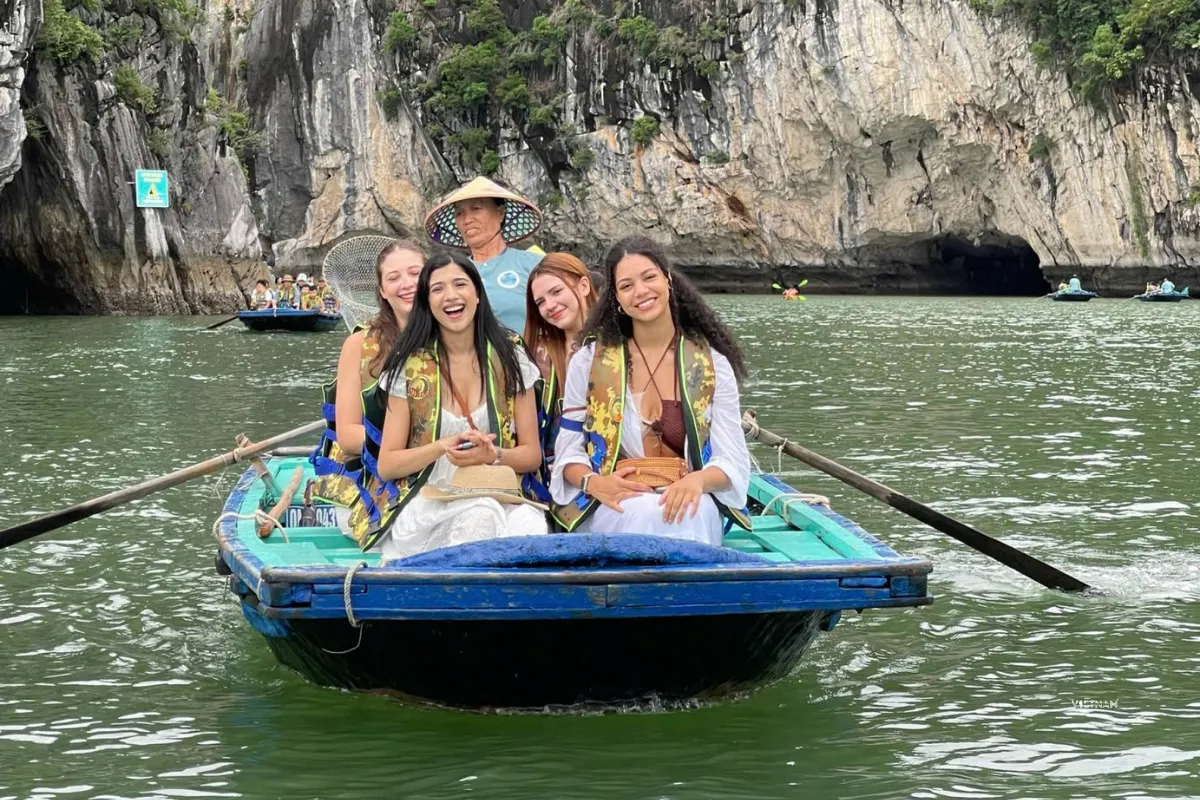
- The bamboo raft to the base (bè nứa) — a 10–15 minute bamboo raft ride from the Vietnamese bank to a position at the base of the lower tier, within the spray zone, looking directly up at the cascade. The closest possible approach to the falls. The raft operators are Tay women in traditional dress; the experience is both physically close to the water and culturally specific. Cost: approximately 80,000 VND per person. Queues form by 9:00 AM on weekends — go first thing or after 3:00 PM.
- The mist walk along the base path — a trail along the river bank between the raft landing and the main viewing area that passes through the waterfall’s spray zone. In the right light (morning, with the sun behind you), the mist creates rainbow arcs visible from the path. The sound of the falls at this proximity is overwhelming in the best possible sense.
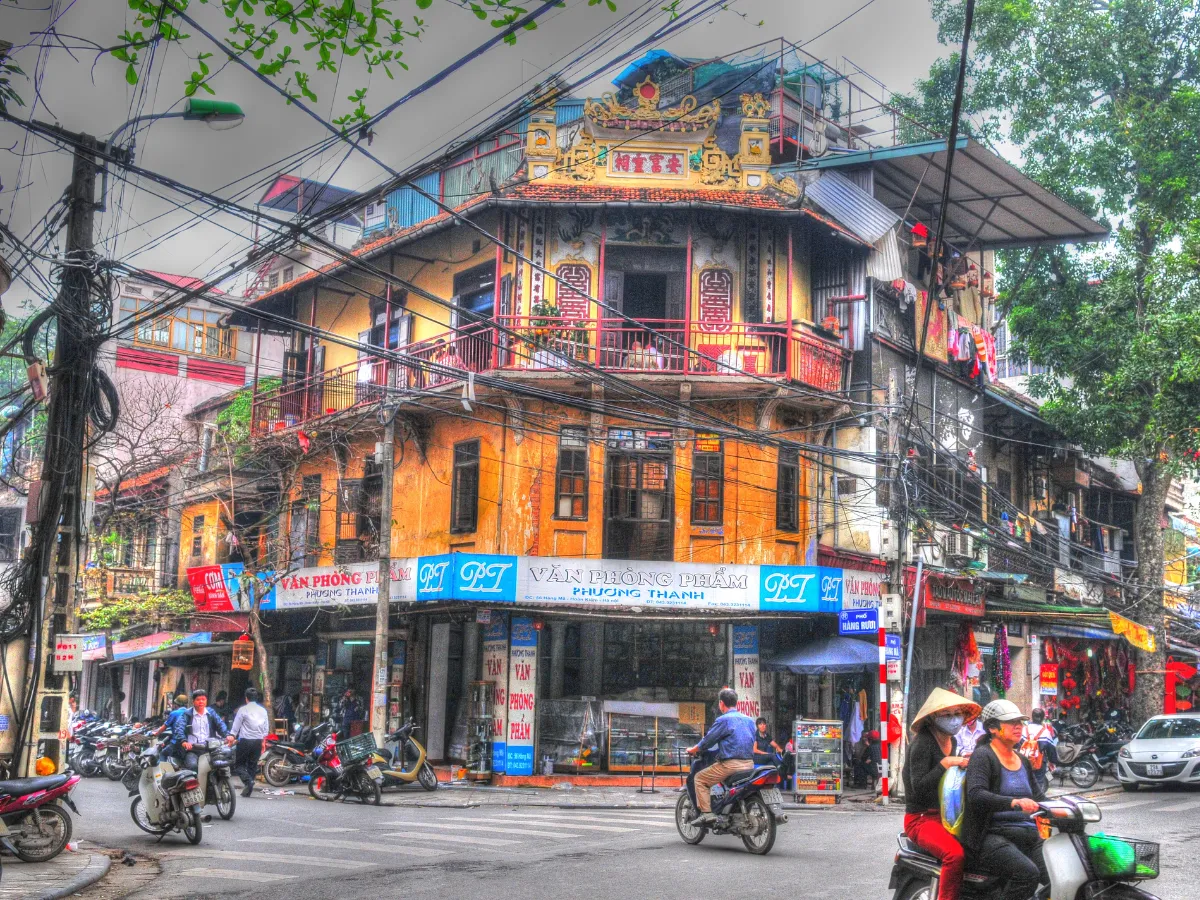
Hanoi Old Quarter
The Heart of Hanoi
2. Nguom Ngao Cave
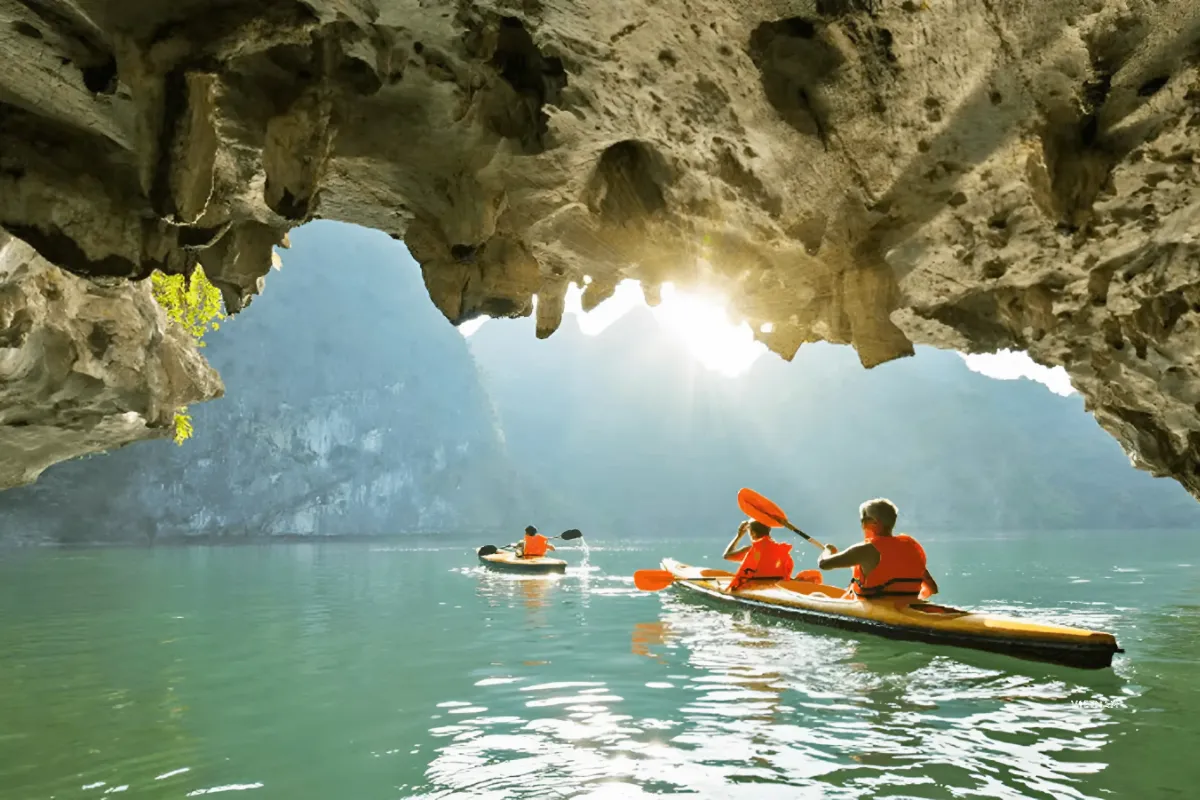
Nguom Ngao — “Tiger Cave” in the Tay language, named for the wild cats that historically used it as shelter — extends 2,144 metres through the Ban Gioc limestone massif. The 900-metre section open to visitors passes through three main chambers of progressively greater scale: the first chamber’s stalactite curtains reaching floor to ceiling, the second’s cathedral hall with formations resembling frozen waterfalls of calcite, and the third’s columns of such diameter they appear structural rather than natural. The cave has been lit for tourism but not over-engineered — the lighting is functional rather than theatrical, and the formations retain their geological integrity. Allow 45–60 minutes; the guided walk is included in the entry fee (30,000 VND). Located 3 km from the waterfall — either a pleasant bicycle ride or a short motorbike journey.

Hoan Kiem Lake
Central Lake in the Heart of Hanoi
3. Cycle the Ban Gioc Valley
The 8 km road from Trung Khanh town to Ban Gioc Waterfall passes through a paddy valley of considerable beauty — Tay stilt houses against limestone peaks, roadside markets, water buffalo in the fields, and the Quay Son River running alongside through sections of forested gorge. Bicycle rental in Trung Khanh town costs 50,000–80,000 VND/day. Cycling rather than riding in a car transforms the approach from a transit to an experience: you arrive at the waterfall having passed through the landscape rather than been delivered to its edge. The return journey in late afternoon, with the light on the karst peaks, is particularly good.
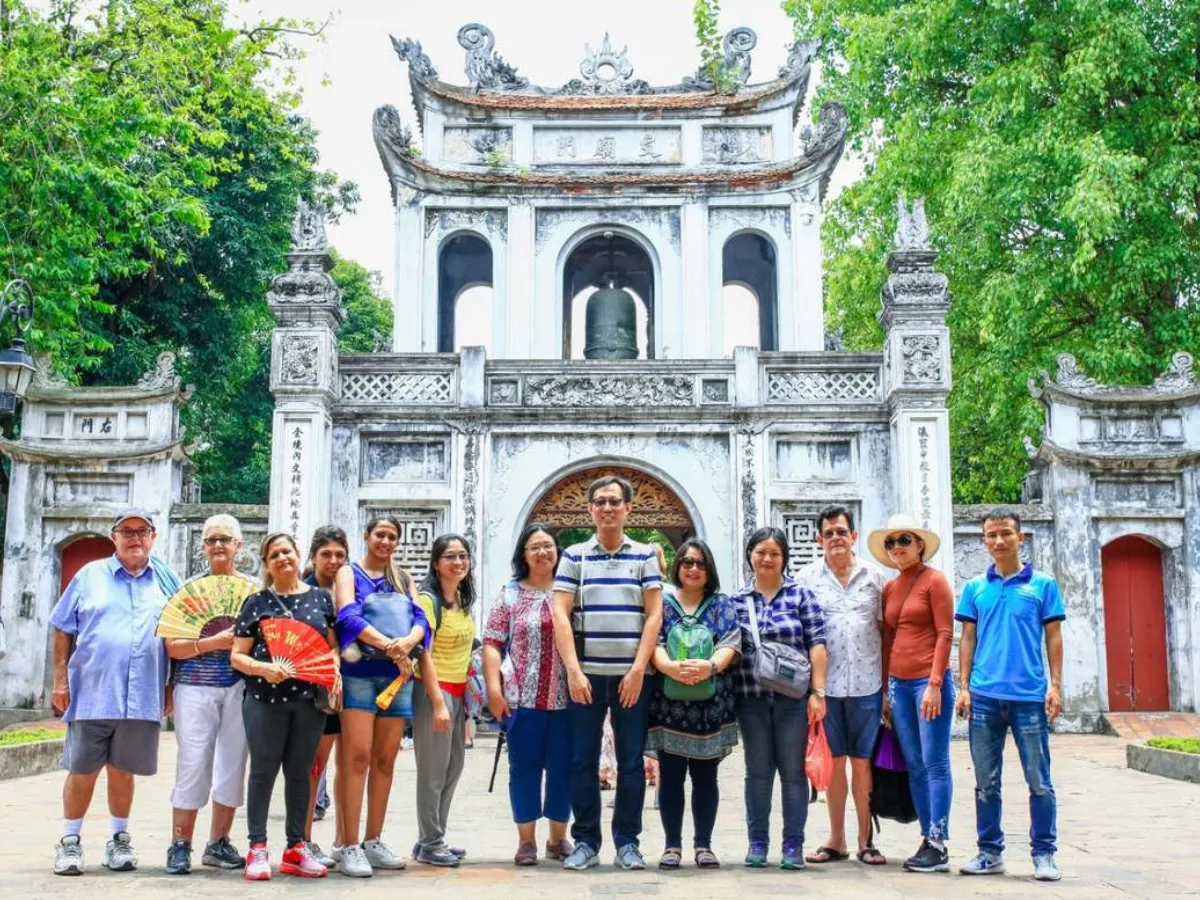
Temple of Literature
The First University in Vietnam
4. Trung Khanh Market (Weekend Mornings)
The district market in Trung Khanh town — 8 km from Ban Gioc, held most actively on Sunday mornings — draws Tay, Nung, and Dao communities from across the border district. The market trades in local agricultural produce, smoked meats (the Tay smoked pork at Cao Bang’s markets is among the best in northern Vietnam), medicinal herbs, fresh river fish, and handmade agricultural tools. Unlike the markets at the more visited northwestern destinations (Dong Van, Sapa), Trung Khanh market operates almost entirely for local trade rather than tourism. Arriving before 8:00 AM on a Sunday reveals a pre-dawn setup process that is more atmospheric than the peak market hour. A 30-minute stop before driving to the waterfall on Sunday morning is highly recommended.
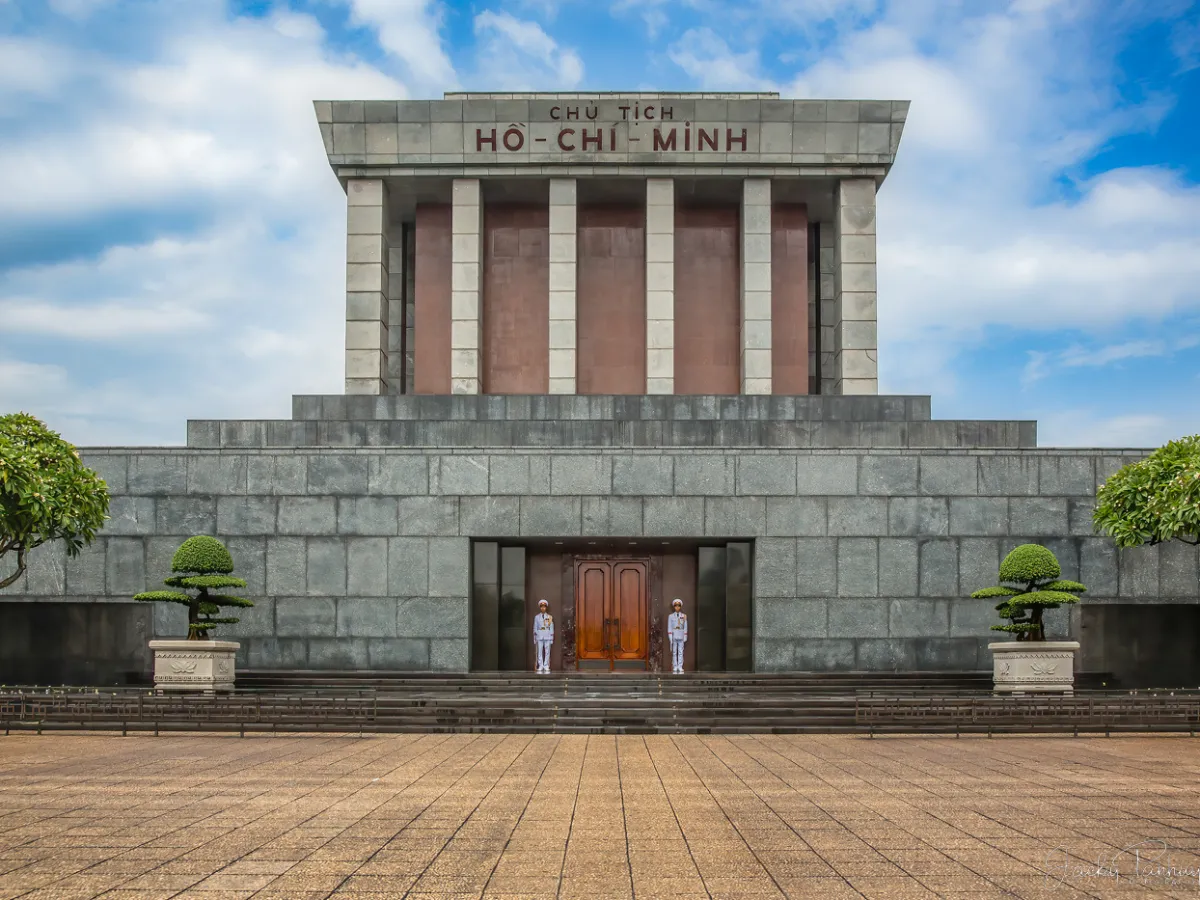
Ho Chi Minh Mausoleum
A Final Rest of National Hero
5. Quay Son River Swimming and Kayaking
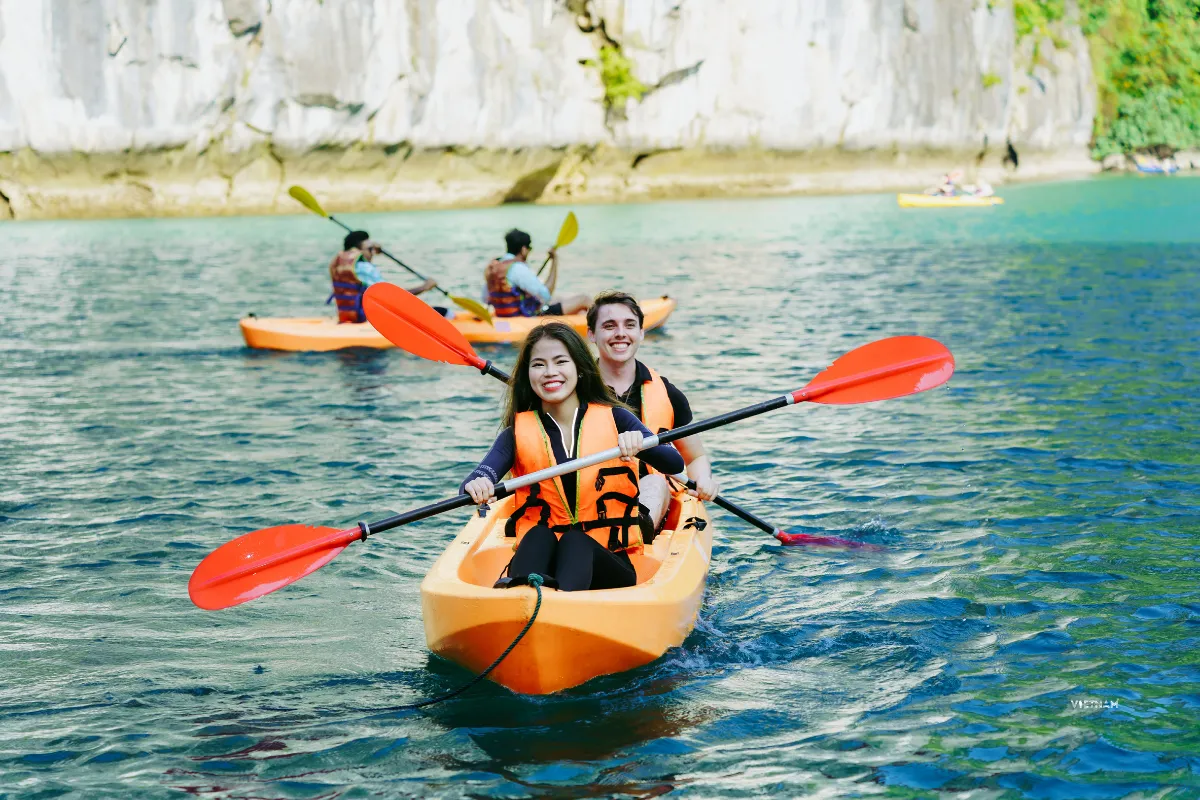
The Quay Son River below the waterfall — downstream from the spray zone and the border area — has sections suitable for swimming in the dry season (November–April). The water is cold, clear, and flows over smooth river stones through a valley of limestone karst and bamboo forest. Several guesthouses near the waterfall have arrangements with local boat operators for river sections accessible by kayak; enquire on arrival for current season availability. Swimming directly at the base of the falls is managed by the raft operators and is part of the raft experience in summer months (May–October when water temperature rises).

Water Puppet Show
A Must-See in Hanoi
6. Ban Gioc Sunrise and Paddy Field Photography
The paddy fields in the valley between Trung Khanh and Ban Gioc are best photographed in the 30 minutes around sunrise — mist fills the valley floor, the limestone peaks emerge above it, and the stilt house villages are silhouetted against the eastern sky. This requires staying overnight near the waterfall rather than arriving by day trip from Cao Bang. The sunrise viewpoint above the main waterfall parking area (a 10-minute walk up the limestone hillside on a maintained path) gives a panoramic position over the entire valley; at dawn, with no other visitors present, it is one of the most peaceful highland vistas in northern Vietnam.

Vietnamese Banh Mi
A Must-Try in Hanoi
Ban Gioc Waterfall: Best Viewpoints and When to Use Each
| Viewpoint | Access | Best Time | Best For | Notes |
|---|---|---|---|---|
| Main Viewing Terrace | 5-min walk from car park, included in entry fee | 8:00–10:30 AM (morning sun on falls) | Full-width panorama, all three tiers visible, classic photograph | Most visited position — busiest 9:30–11:30 AM. Arrive at 8:00 AM for crowds-free window. |
| Bamboo Raft Base Position | 10–15 min raft from Vietnamese bank (80,000 VND pp) | Morning (best light) or late afternoon | Closest approach, spray experience, looking up at lower tier, raft culture encounter | Queues form quickly on weekends. First boat of the day (7:30–8:00 AM) is least crowded. Bring waterproof bags. |
| Hillside Sunrise Viewpoint | 10-min walk up maintained path above car park | 5:30–7:00 AM (sunrise, pre-visitor rush) | Valley panorama, paddy mist, karst silhouettes, no crowds | Requires overnight stay nearby. The most atmospheric Ban Gioc viewpoint and the least used. |
| Mid-River Island | By bamboo raft (included in raft fee) | Morning | Standing on the border island, spray from all sides, unique geopolitical position | Access subject to border management rules — confirm with raft operators on arrival. Not always open. |
| River Bank Mist Path | Ground-level path from raft landing to main viewing area (~500 m walk) | Morning (rainbow in spray with morning sun) | Immersive spray experience, rainbow photography, sound of the falls at full volume | Wet — waterproof footwear recommended. Most atmospheric in September–October at high flow. |
Our recommendation: Arrive at the waterfall by 7:30–8:00 AM. Take the first raft to the base. Return to the main viewing terrace for the full panorama in morning light. Walk the mist path back to the car park. This 2.5-hour morning sequence covers every significant perspective on the falls in the best light, before the 9:30 AM tour bus arrival fills the viewing terrace. Return in late afternoon (4:00–5:30 PM) for golden hour on the falls if staying overnight.
Ban Gioc is 370 km from Hanoi — but pairs perfectly with Ba Be Lake for a 4-day northeast Vietnam circuit. Our team designs the full Ba Be + Ban Gioc itinerary and handles all logistics. Message us on WhatsApp →
Best Time to Visit Ban Gioc Waterfall: Month-by-Month Guide
The best time to visit Ban Gioc is September to October — when the post-monsoon river flow is at its maximum (producing the widest, most powerful falls) and the surrounding landscape transitions from green to harvest gold. The waterfall is beautiful year-round, but the seasonal variation here is more dramatic than at most Vietnamese natural attractions.
| Period | Conditions | Waterfall Flow | Surroundings | Verdict |
|---|---|---|---|---|
| Jan – Mar | 12–18°C / 54–64°F. Cool, dry, some mist mornings | Low — narrower, more defined tiers | Bare paddy fields, winter karst — stark and photogenic | Good for clear-sky photography — low flow means the individual tiers are more distinct and the rock faces more visible. Cold mornings. Very few visitors. The most atmospheric season for the surrounding karst landscape if flow volume matters less to you than clarity. |
| Apr – May | 20–27°C / 68–81°F. Warming, pre-rain season | Moderate — building toward summer | Young green paddy, spring flowers on karst slopes | Good. Comfortable temperatures, increasing flow, spring green landscape. The paddy planting creates vivid green valley floor. Good photography conditions before the humidity of summer. One of the least-crowded windows. |
| Jun – Aug | 26–32°C / 79–89°F. Hot, heavy rain. High humidity. | High to very high — occasionally violent in flood conditions | Dense green — impressive but visibility can be limited by cloud | Dramatic but challenging. The falls at high summer flow are genuinely powerful — the spray zone extends much further and the sound is extraordinary. Vietnamese domestic holiday peak in July–August. Afternoon thunderstorms common. Road sections occasionally affected by landslides. Not recommended unless specifically seeking maximum flow. |
| Sep – Oct ⭐⭐ | 20–27°C / 68–81°F. Clearing skies, post-rain freshness | Maximum volume — widest spread across all three tiers | Golden harvest paddy in October — the most beautiful surrounding landscape | Best overall. The post-monsoon river flow peaks in September, and the falls are at their widest and most powerful at the moment the sky clears and the surrounding landscape turns gold for harvest. This two-week window in late September – early October catches both peak flow and peak visual surroundings simultaneously. Book accommodation 2–3 weeks ahead. |
| Nov – Dec | 14–22°C / 57–72°F. Cooling, clear and dry | Moderate and declining | Post-harvest, bare fields, winter clarity | Good. Clear skies and excellent photography light. Flow declining but still substantial. The dry-season character of the falls — more defined tiers, visible rock faces — has its own photographic quality. November is one of the best months for the complete northeast circuit (Ba Be + Ban Gioc) without weather risk. |
The critical timing insight: Ban Gioc’s September–October peak flow overlaps almost exactly with the Hoang Su Phi and Mu Cang Chai rice harvest seasons. Travelers planning a 10-day northwest + northeast circuit can visit the terrace harvest destinations (Hoang Su Phi and/or Mu Cang Chai) in mid-to-late September, then move northeast to Ba Be and Ban Gioc in early October when the waterfall is still at maximum flow and the karst landscape surrounding it is at its most vivid. This circuit — one of northern Vietnam’s most complete itineraries — requires advance planning but covers more visual and cultural range than any other trip of equivalent length.
How to Get from Hanoi to Ban Gioc Waterfall

| Type / Location | Best For | Vibe | Price (per night) |
|---|---|---|---|
| Ban Gioc village guesthouses (within 1–2 km of falls) | Most visitors — proximity to the falls, sunrise access | Simple guesthouses in the Tay and Nung villages immediately adjacent to the waterfall. Basic facilities, local food, the falls audible from your room at high flow. The best position for dawn photography and evening return visits. | $15–$45 per room |
| Tay stilt house homestay (Ban Gioc valley villages) | Cultural immersion, authentic local experience | Traditional Tay stilt house in the paddy valley — communal dinner with host family, local smoked meats and river fish, waking to the sound of the waterfall. Less polished than Pac Ngoi (Ba Be) homestays but more genuine in character. | $12–$25 per person (meals included) |
| Trung Khanh town guesthouses (8 km from falls) | Budget travelers, Sunday market access | Small district town — more restaurant and ATM options than Ban Gioc village, 15-minute drive or 30-minute cycle to the falls. Better base if combining with the Trung Khanh Sunday market. | $10–$30 per room |
| Cao Bang City hotels (90 km from falls) | Longer circuit travelers, comfort seekers | Provincial city with proper hotel facilities — better food options, reliable ATM, WiFi. Requires a 2-hour morning drive to the falls. Good base for the full Cao Bang Province circuit but misses the waterfall evening and dawn experiences. | $20–$80 per room |
Our recommendation: Stay in a Ban Gioc village guesthouse or Tay homestay within 2 km of the waterfall. The dawn access — waking before 5:30 AM, walking to the hillside viewpoint above the falls as the mist rises off the paddy valley — is only available to people who slept nearby. The waterfall at sunrise, with no other visitors present, is worth the basic facilities trade-off over a Cao Bang City hotel. One night is sufficient; two nights allows a full day for Nguom Ngao Cave, valley cycling, and a relaxed afternoon return visit to the falls.
Where to Stay at Ban Gioc Waterfall?

| Type / Location | Best For | Vibe | Price (per night) |
|---|---|---|---|
| Ban Gioc village guesthouses (within 1–2 km of falls) | Most visitors — proximity to the falls, sunrise access | Simple guesthouses in the Tay and Nung villages immediately adjacent to the waterfall. Basic facilities, local food, the falls audible from your room at high flow. The best position for dawn photography and evening return visits. | $15–$45 per room |
| Tay stilt house homestay (Ban Gioc valley villages) | Cultural immersion, authentic local experience | Traditional Tay stilt house in the paddy valley — communal dinner with host family, local smoked meats and river fish, waking to the sound of the waterfall. Less polished than Pac Ngoi (Ba Be) homestays but more genuine in character. | $12–$25 per person (meals included) |
| Trung Khanh town guesthouses (8 km from falls) | Budget travelers, Sunday market access | Small district town — more restaurant and ATM options than Ban Gioc village, 15-minute drive or 30-minute cycle to the falls. Better base if combining with the Trung Khanh Sunday market. | $10–$30 per room |
| Cao Bang City hotels (90 km from falls) | Longer circuit travelers, comfort seekers | Provincial city with proper hotel facilities — better food options, reliable ATM, WiFi. Requires a 2-hour morning drive to the falls. Good base for the full Cao Bang Province circuit but misses the waterfall evening and dawn experiences. | $20–$80 per room |
Our recommendation: Stay in a Ban Gioc village guesthouse or Tay homestay within 2 km of the waterfall. The dawn access — waking before 5:30 AM, walking to the hillside viewpoint above the falls as the mist rises off the paddy valley — is only available to people who slept nearby. The waterfall at sunrise, with no other visitors present, is worth the basic facilities trade-off over a Cao Bang City hotel. One night is sufficient; two nights allows a full day for Nguom Ngao Cave, valley cycling, and a relaxed afternoon return visit to the falls.
3-Day Northeast Vietnam Itinerary: Ba Be Lake + Ban Gioc Waterfall
This is the northeast Vietnam circuit we recommend most often — combining Ba Be Lake (2 nights) with Ban Gioc Waterfall (1 night) in a single trip from Hanoi that requires no backtracking. It is the most complete northeast Vietnam experience available in 4 days total.
Day 1: Hanoi → Ba Be Lake (covered in Ba Be Lake guide)
- Depart Hanoi 7:00 AM. Arrive Ba Be National Park / Pac Ngoi village by early afternoon. Full-day boat circuit, Puong Cave, Dau Dang Waterfall, Tay stilt house homestay.
- See the Ba Be Lake Travel Guide for the full Day 1–2 programme.
- Overnight at Ba Be Lake — Pac Ngoi Tay stilt house homestay
Day 2: Ba Be Dawn Kayak → Cao Bang Plateau Drive → Ban Gioc Arrival
- 5:30 AM: Dawn kayak on Ba Be Lake — the lake in morning mist before departure. The last and best morning at Ba Be (see Ba Be guide for detail).
- 7:30 AM: Breakfast at homestay. Pack bags, farewell to host family.
- 9:00 AM: Depart Pac Ngoi by private car northeast toward Cao Bang Province.
- The 130 km road from Ba Be to Ban Gioc takes 3 hours and is one of the most scenic provincial roads in northern Vietnam — it crosses the karst plateau of central Cao Bang Province via a series of mountain passes with valley views, passing through Nung and Tay villages with traditional architecture that the main highways don’t reveal.
- 11:30 AM: Pass through Cao Bang City (optional 30-min stop). The city’s main market runs until noon on weekdays — the smoked pork, wild honey, and herb stalls in the covered market section are worth 20 minutes if timing aligns.
- 1:30 PM: Arrive Ban Gioc area. Check in to guesthouse or homestay near the waterfall. Lunch at a local restaurant — vịt quay Cao Bang (Cao Bang roast duck — the province’s signature dish, golden-skinned, served with noodles and ginger dipping sauce) if available.
- 3:30 PM: First visit to Ban Gioc Waterfall — afternoon light on the falls between 3:00–5:30 PM is warm and directional. The viewing terrace is less crowded in the afternoon than the morning peak. Take the bamboo raft if queues are short; otherwise visit the mist path along the river bank.
- 5:30 PM: Return to accommodation. The sound of the waterfall carries to most guesthouses within 2 km — audible through the evening and at night.
- Evening: Dinner at guesthouse or local restaurant. Thịt lợn quay (roast pork), cá suối nướng (grilled stream fish), and the local rượu ngô Cao Bang (corn wine) are the regional specialties.
- Overnight near Ban Gioc Waterfall
Day 3: Sunrise → Waterfall Morning → Nguom Ngao Cave → Valley Cycle → Return to Hanoi
- 5:15 AM: Walk to hillside sunrise viewpoint above the waterfall parking area. The mist-filled paddy valley below, the limestone peaks silhouetted against the eastern sky, and the sound of the falls before any other visitor arrives — this is the defining Ban Gioc experience and requires overnight proximity.
- 6:45 AM: Return to guesthouse for breakfast.
- 7:30 AM: Back to the waterfall. Take the first bamboo raft of the morning (operators begin ~7:30 AM) to the base of the lower tier. Morning light is best for the spray and rainbow conditions. 15–20 minutes on the raft, plus 20 minutes on the river bank mist path. Back at the main viewing terrace by 9:00 AM for the full panorama in morning sun.
- 9:30 AM: Cycle to Nguom Ngao Cave (3 km, 15 min by bicycle). One-hour guided walk through the cave system. Allow 90 minutes total including travel. The cave entrance is a 5-minute walk from the road — the approach through limestone forest with swifts visible at the entrance is itself atmospheric.
- 11:30 AM: Return to Ban Gioc village by bicycle. Pack bags and check out.
- 12:30 PM: Depart for Hanoi via Cao Bang City. The return journey takes 6.5–7.5 hours.
- Optional stop: Thang Hen Lake (30 km from Cao Bang City on the return route) — a small karst lake at 600 metres with a seasonal waterfall and forest walking trail. 45-minute stop; worth it on a clear afternoon.
- Arrive Hanoi approximately 7:00–8:00 PM.
- Return to Hanoi
- Circuit tip: If returning Sunday, time the Cao Bang City pass-through for the city’s largest weekly market (Sunday morning, 7:00–11:00 AM) — the smoked meat and herb section of Cao Bang market is worth a 30-minute stop on the return journey and adds an authentically local final note to the northeast circuit.
Want the Full Northeast Vietnam Circuit — Ba Be + Ban Gioc — Arranged from Hanoi?
Our Hanoi-based team designs the complete Ba Be Lake + Ban Gioc Waterfall northeast circuit — private transport with scenic approach routes, Pac Ngoi homestay booking, Ban Gioc valley guesthouse coordination, and a return that avoids backtracking. This 4-day circuit is the most consistent recommendation we make to travelers who want northern Vietnam’s best-kept secrets. Most guests receive a custom plan within 4 hours.
Request Your Free Northeast Circuit Itinerary →
Tell us your travel dates and group size. We’ll send a day-by-day plan with transparent pricing within 4 hours.
Sale!
Private Mai Chau Day Trip And Waterfall & Hot Spring Bath

Place
Mai Chau

Duration
1D
Original price was: 175$.125$Current price is: 125$.
Sale!
Authentic Hanoi Day Tour | Incense Village & Duong Lam Ancient Village
Place
Hanoi
Duration
1D
Original price was: 120$.105$Current price is: 105$.
Sale!
Hanoi Cycling Tour | Bat Trang, Kim Lan & Xuan Quan Flower Villages
Place
Bat Trang
Duration
1D
Original price was: 65$.55$Current price is: 55$.
Sale!
Half-Day Hanoi City Tour | Explore Iconic Landmarks in Just Few Hours
Place
Ha Noi
Duration
1D
Original price was: 50$.35$Current price is: 35$.
Sale!

Exclusive Hanoi Street Food Tour | Discover Hanoi’s Best Eats on Foot
Place
Ha Noi
Duration
1D
Original price was: 50$.35$Current price is: 35$.
Sale!

Hanoi City Tour | Highlights, Local Culture | Best of Hanoi in One Day
Place
Ha Noi
Duration
1D
Original price was: 55$.45$Current price is: 45$.
Sale!
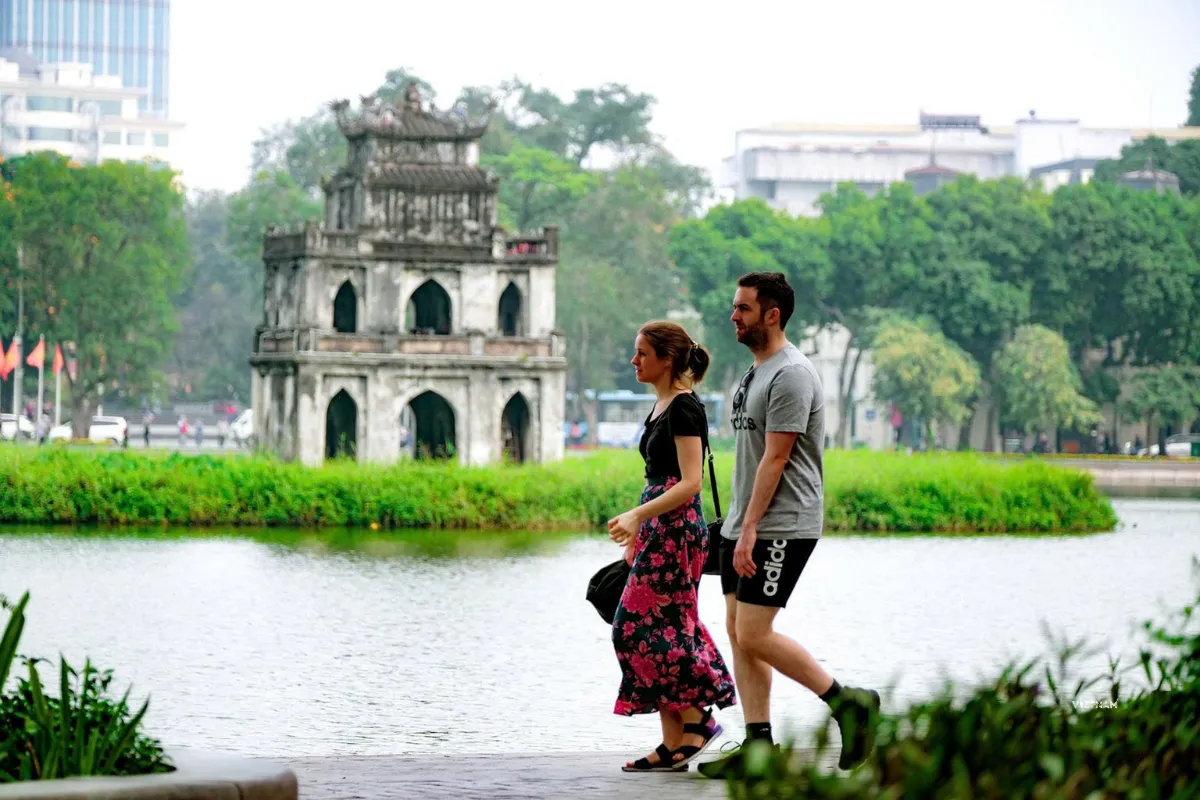
Top Hanoi City Walking Tour | Discover the Best of Hanoi in One Day
Place
Hanoi Capital City
Duration
1D
Original price was: 60$.50$Current price is: 50$.
Sale!
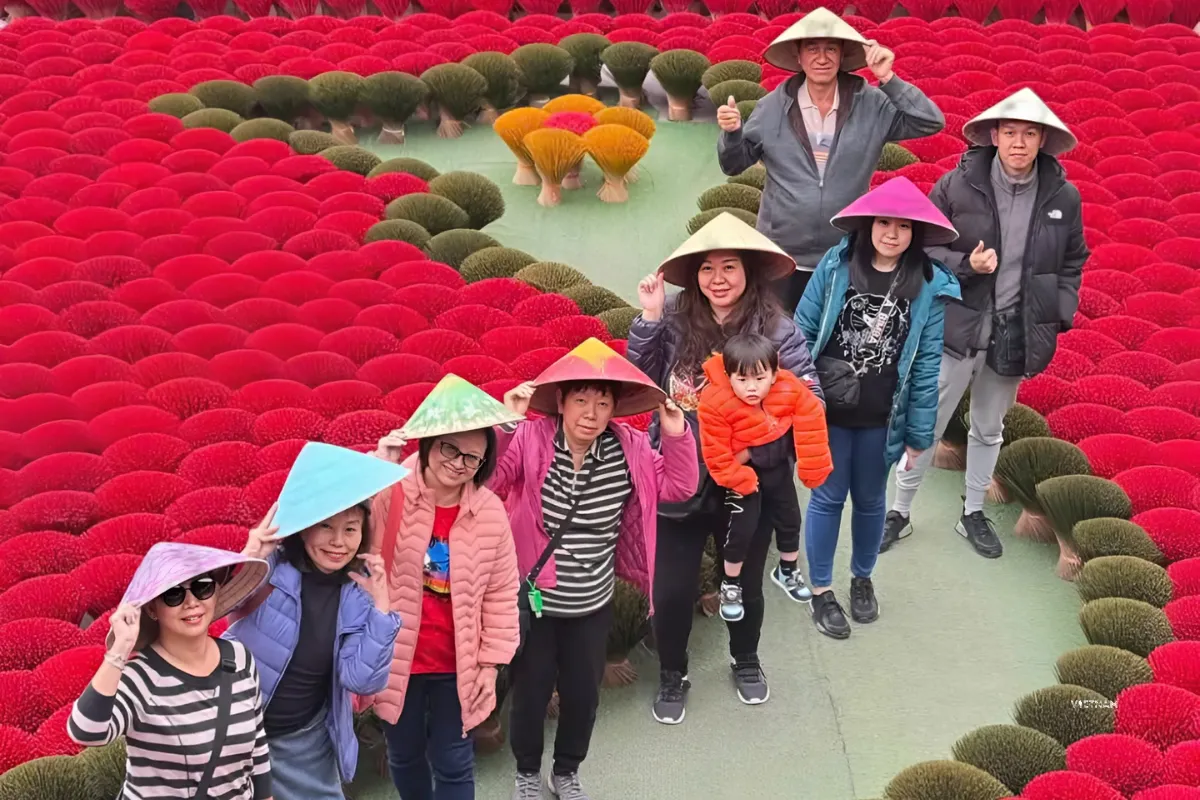
Incense Village Hanoi Tour | Explore Traditional Craft & Local Culture
Place
Quang Phu Cau
Duration
1D
Original price was: 85$.55$Current price is: 55$.
The Cao Bang Province Circuit: Beyond Ban Gioc
For travelers with 3–4 days in Cao Bang Province (rather than 1–2 at the waterfall), the surrounding district offers enough additional content to fill a complete itinerary without repetition:
- Pac Bo Historical Site (50 km from Cao Bang City): The cave and spring where Ho Chi Minh lived and worked in hiding during the resistance against French colonialism in 1941–1945. The site has deep significance in Vietnamese national narrative — the cave, the Ka river (named after Karl Marx by Ho Chi Minh), and the mountain he named after Lenin are all within a small complex. A mandatory stop for travelers interested in Vietnamese 20th-century history. Allow 1.5 hours.
- Thang Hen Lake System (30 km from Cao Bang City): A karst lake at 600 metres with a seasonal waterfall that drops dramatically in the wet season. The surrounding area has a network of smaller limestone ponds connected by underground channels — the full system extends across 36 interconnected water bodies visible from a single ridge viewpoint. Best visited in September–October when water levels are highest.
- Cao Bang Market (daily, largest on Sundays): The main market in Cao Bang City is one of the best provincial markets in northeast Vietnam — large enough to have dedicated sections for smoked meats (Cao Bang’s vit quay roast duck and khau nhuc braised pork are two of the best regional dishes in the north), medicinal herbs and roots collected from the surrounding karst forest, traditional silver jewellery made by Dao craftspeople, and woven fabrics from Nung communities. Worth 45–60 minutes on any day; on Sunday mornings the range doubles.
- The Cao Bang–Ban Gioc approach road (National Highway 3 variant): The 90 km road from Cao Bang City to Ban Gioc passes through the most spectacular inland karst landscape in northern Vietnam outside of Ha Giang — narrow passes between vertical limestone walls, river gorge sections, and village markets that appear at the road’s edge without warning. Riding this road slowly, stopping at the Trung Khanh market and the several karst viewpoints between town and falls, is itself one of Cao Bang Province’s best experiences.
Beyond the Standard Visit: Less-Known Ban Gioc Experiences
The waterfall at night (full moon): On clear full moon nights — particularly in September and October when the moon is brightest and the falls are at high flow — Ban Gioc Waterfall is visible after dark from the hillside viewpoint above the car park. The falls appear silver-white against the dark limestone, the mist catches the moonlight, and the sound is unchanged from daylight. No other visitors are present; the access path is short and clear. If your overnight falls near a full moon in good weather months, this is worth a late-evening walk.

- Cao Bang roast duck (vịt quay) at source: Cao Bang Province’s roast duck — golden-skinned, fragrant with star anise and ginger, served with rice noodles and a specific dipping broth — is considered by many Vietnamese food travelers to be the best regional roast duck in the country. The technique differs from Hanoi’s preparation: slower roasting, different spice balance, served whole rather than pre-cut. The best preparation is in Cao Bang City restaurants and at roadside stalls on the Cao Bang–Trung Khanh road — eaten at the source rather than replicated in Hanoi. Ask your guide or driver for their specific recommendation rather than the most obvious tourist restaurant.
- The second waterfall (Ban Gioc lower cascade) — almost no one visits: The Ban Gioc waterfall system has a lower secondary cascade approximately 200 metres downstream from the main viewing area — smaller, quieter, and completely unvisited by the tour groups who arrive at the main entrance and leave without exploring downstream. The path along the Vietnamese bank below the main viewing terrace reaches the secondary cascade in a 10-minute walk; the view looking back upstream from this position — with the main falls visible in the background above a forested river section — is compositionally different from any of the standard viewpoints and photographically interesting for travelers who want images beyond the iconic angle.
- Dawn on the Cao Bang plateau approach road: The drive from Cao Bang City to Ban Gioc through the karst plateau is typically done in mid-morning on arrival day. Departing Cao Bang City at 5:00 AM instead means crossing the most dramatic section of the approach road — the narrow pass between the vertical limestone walls at kilometre marker 62, and the river gorge section above Trung Khanh — in low morning light with mist in the valley floors. The road in these conditions is genuinely extraordinary and deserves more than transit status.
Ban Gioc Waterfall: How It Compares?
For travelers calibrating expectations, Ban Gioc is often mentioned alongside Niagara Falls and Detian Falls (the Chinese side of the same waterfall) as a continental boundary waterfall. Here is the honest comparison:
| Criteria | Ban Gioc (Vietnam side) | Detian (China side) |
|---|---|---|
| Access for international visitors | Easy — standard Vietnam tourist visa, no special permit | Requires China visa — unavailable to many nationalities at short notice |
| Infrastructure | Simple — small guesthouses, basic viewing platforms | More developed — larger hotels, cable car options, more polished tourism |
| Crowd level | Low–Moderate (high on Vietnamese national holidays) | Higher — larger domestic tourism base |
| Natural surroundings | Paddy fields, stilt house villages, unmanicured karst | More groomed — scenic but more managed |
| View of full waterfall | Full width visible from Vietnamese side in morning light | Full width visible but different angle (northeast facing) |
| Cultural dimension | Deep — Tay and Nung communities integral to the landscape | Present but more touristically packaged |
The honest answer: The Vietnamese side of Ban Gioc is the better visit for most international travelers — simpler visa logistics, more authentic surrounding landscape, lower crowd levels, and the combination with Ba Be Lake creating a multi-day circuit that the Chinese side cannot match. For travelers with a valid China visa who have already visited Ban Gioc and want to compare perspectives, the Detian side offers a different vantage point on the same extraordinary waterfall.
Essential Ban Gioc Travel Tips (From Our Local Team)
Arrive at the falls before 8:00 AM. The main viewing terrace fills with Vietnamese domestic tour groups by 9:30–10:00 AM, particularly on weekends and national holidays. The 7:30–9:00 AM window — when the falls are in morning light, the tour buses haven’t arrived, and the raft operators are starting their first runs — is consistently the best time to be there. An overnight stay within 2 km of the falls is the only reliable way to guarantee this window.
Take the bamboo raft — it is not optional. The bamboo raft to the base of the falls is the most common activity that first-time visitors decide to skip for logistical reasons (queue, cost, getting wet) and most consistently regret not doing. The 15 minutes at the base of the lower tier — within the spray, looking directly up at the cascade, on a traditional bamboo raft poled by a Tay woman — is a qualitatively different experience from any viewing platform. Budget time and willingness to get damp. Waterproof bags for phones and cameras are non-negotiable on the raft.
- Nguom Ngao Cave is not a secondary attraction. Most visitors treat the cave as an add-on to the waterfall — spending 90 minutes there before driving away. Those who enter with genuine attention consistently rate it as equal to the waterfall in visual impact. The scale of the formations in the second chamber — stalactites of a diameter and height that contextualise how long this limestone has been forming — is genuinely awe-inspiring. Allow a full morning for the cave (entry at opening, 7:30 AM) rather than squeezing it in as an afterthought.
- The border context is real — follow the boundary markers. Ban Gioc Waterfall sits on the Vietnam–China border, and the riverbank and mid-river island have specific access boundaries managed by both governments. The bamboo raft operators know exactly where the permitted zone ends; the hillside viewpoints are entirely on the Vietnamese side. Do not wade into the river or approach the Chinese bank independently. The border management at this point is generally relaxed for tourism but the restrictions exist and are enforced periodically.
- Withdraw cash before leaving Cao Bang City. Trung Khanh town has one or two ATMs with inconsistent reliability; Ban Gioc village has none. All guesthouse fees, raft costs, cave entry, bicycle rental, and market purchases within 30 km of the falls are cash-only. Withdraw in Cao Bang City (reliable ATM network) or in Ba Be area if arriving on the northeast circuit. 500,000–700,000 VND per person per day is sufficient for most visits.
- The Cao Bang roast duck (vit quay) is worth eating at least once. The province’s signature dish — available at dedicated restaurants in Cao Bang City and at roadside stalls on the Cao Bang–Trung Khanh road — is genuinely different from roast duck elsewhere in Vietnam. Ask your driver where they eat it rather than going to the most visible tourist restaurant. The best versions come out of charcoal rotisseries in the early afternoon (11 AM–2 PM); timing a lunch stop in Cao Bang City or Trung Khanh town accordingly produces the best result.
- Plan the northeast circuit so you don’t backtrack. The most common logistical error for Ba Be + Ban Gioc visitors is driving Hanoi → Ba Be → Hanoi, then a separate Hanoi → Cao Bang → Ban Gioc → Hanoi trip. The two destinations are 130 km apart — the circular route Hanoi → Ba Be → Ban Gioc → Cao Bang → Hanoi covers both without retracing a single road. Map it before booking and the logistics are straightforward; ignore it and you add 5+ unnecessary driving hours to the combined trip.

Frequently Asked Questions — Ban Gioc Waterfall Travel Guide
What is Ban Gioc Waterfall?
Ban Gioc is Vietnam’s largest waterfall — a 300-metre-wide, three-tier cascade on the Quay Son River on the Vietnam–China border in Cao Bang Province, 370 km north of Hanoi. It is one of the largest waterfalls in Asia and the largest on any international border in Southeast Asia. Surrounded by limestone karst peaks, Tay ethnic minority villages, and paddy fields, it is considered the most visually complete waterfall landscape in Vietnam and one of the most beautiful natural attractions in northern Asia.
Is Ban Gioc Waterfall worth visiting?
Yes — Ban Gioc is genuinely one of the most spectacular natural attractions in Vietnam and consistently surprises visitors who arrive without specific expectations. The combination of waterfall scale (300 metres wide, three tiers), border setting (the Chinese side visible across the river), the traditional bamboo raft experience, and the surrounding Cao Bang karst landscape makes it exceptional. It is best visited as part of the northeast Vietnam circuit with Ba Be Lake (2–3 hours away), which together create one of northern Vietnam’s most rewarding and least-crowded multi-day trips.
How far is Ban Gioc Waterfall from Hanoi?
Ban Gioc Waterfall is approximately 370 km from Hanoi — a journey of 6.5–7.5 hours by private car via National Highway 3 through Bac Kan and Cao Bang provinces. There is no direct bus service from Hanoi to Ban Gioc; the most practical public transport option is an overnight bus to Cao Bang City followed by a local car hire for the final 90 km. The most efficient approach for most travelers is a private car that combines the journey with Ba Be Lake (240 km from Hanoi, 130 km southwest of Ban Gioc) in a single northeast circuit.
When is the best time to visit Ban Gioc Waterfall?
The best time to visit Ban Gioc Waterfall is September to October, when the post-monsoon river flow is at its maximum — producing the widest, most powerful cascade across all three tiers — and the surrounding paddy fields are turning gold for harvest. This window also overlaps with the clearest skies of the year after the rainy season clears. Late September is particularly good: high flow, clear weather, and the golden harvest landscape simultaneously. November to January is the best period for clear photography in dry conditions, with lower but still impressive flow.
What is the best thing to do at Ban Gioc Waterfall?
The bamboo raft ride to the base of the lower waterfall tier — poled by a Tay woman in traditional dress to a position within the spray zone, looking directly up at the cascade — is the most distinctive Ban Gioc experience and the one most visitors say they would not skip on a return visit. Combined with the main viewing terrace (for the full three-tier panorama in morning light) and Nguom Ngao Cave (3 km away, one of the best cave systems in Vietnam), the three activities together make a complete day at Ban Gioc that justifies the journey from Hanoi.
Can I see both the Vietnamese and Chinese sides of Ban Gioc Waterfall?
The Vietnamese side is fully accessible with a standard Vietnam tourist visa — no special permit required. The Chinese side (Detian Waterfall) requires a valid China visa, which many nationalities cannot obtain at short notice. From the Vietnamese viewing terrace, the Chinese bank is clearly visible across the river, and the full width of the waterfall — spanning both countries — is visible in a single panoramic view. The bamboo raft experience navigates into the border zone but stays within the Vietnamese-permitted area. Most international visitors experience Ban Gioc from the Vietnamese side only, which provides a complete and visually excellent encounter with the falls.
Should I combine Ban Gioc Waterfall with Ba Be Lake?
Yes — strongly recommended. Ba Be Lake and Ban Gioc Waterfall are 130 km apart and can be combined in a single northeast Vietnam circuit (Hanoi → Ba Be → Ban Gioc → Hanoi) with no backtracking required. Together they cover two of northern Vietnam’s most spectacular and least-visited natural attractions: Ba Be for freshwater lake wilderness and Tay cultural homestay, Ban Gioc for Vietnam’s largest waterfall and Cao Bang karst scenery. The 4-day combined circuit is consistently described by experienced Vietnam travelers as one of the country’s best-kept travel secrets.
What food is Cao Bang Province known for?
Cao Bang Province has two dishes considered among the best regional specialties in northern Vietnam: vịt quay Cao Bang (Cao Bang roast duck — golden-skinned, fragrant with star anise and ginger, served with rice noodles and a specific dipping broth; considered by many Vietnamese food travelers to be the country’s best roast duck preparation) and khau nhục Cao Bang (braised pork belly in fermented bean curd and spices, slow-cooked until the fat is translucent — a Tay preparation that requires hours of cooking and produces an intensely flavoured result). Both are available in Cao Bang City restaurants, at roadside stalls on the Cao Bang–Trung Khanh road, and at the Cao Bang City market.
Plan Your Ban Gioc Waterfall Trip with a Local Expert
We’re a Hanoi-based travel company — and the northeast Vietnam circuit (Ba Be Lake + Ban Gioc Waterfall) is one of our most consistently recommended trips for travelers who want northern Vietnam’s best-kept secrets without the crowds of Ha Long Bay or Sapa. When you book through us, you get private transport that takes the scenic approach routes rather than the fastest roads, a Ban Gioc valley guesthouse positioned for sunrise access, timing advice for September–October peak flow season, and a circuit that covers both destinations without backtracking.
- Northeast Vietnam circuit: Ba Be Lake + Ban Gioc Waterfall (4 days, no backtracking)
- Ban Gioc valley guesthouse and Tay homestay bookings near the falls
- Private transport with Cao Bang City market and scenic approach stops
- Nguom Ngao Cave timing and Trung Khanh market coordination
- September–October peak flow season timing advice
- Available 7 days a week — respond within 2–4 hours on WhatsApp
Get Your Free Ban Gioc Waterfall Trip Plan
Tell us your travel dates and group size, and whether you want to combine with Ba Be Lake. We’ll send you a day-by-day northeast circuit plan with transparent pricing within 4 hours.
Request Your Free Ban Gioc Itinerary →
Or message us directly on WhatsApp: +84 849 391 981
Explore More Northern Vietnam
- Ba Be Lake Travel Guide — the natural circuit partner, 130 km southwest of Ban Gioc
- Ha Long Bay Travel Guide — the same karst geology, on the coast
- Ha Giang Travel Guide — for travelers combining northeast and northwest circuits
- Ninh Binh Travel Guide — karst landscape 2 hours from Hanoi
- Hanoi Travel Guide — the departure base for all northeast Vietnam trips
- 5-Day Northern Vietnam Itinerary — Hanoi + Ba Be + Ban Gioc + Cao Bang
- 10-Day Northern Vietnam Itinerary — northeast + northwest combined
- Browse Ban Gioc Tours →